News
Page 1 of 3
Sept 2026Fonds Podiumkunsten supports Cantata for Flesh and Code
Fonds Podiumkunsten has awarded a grant towards Cantata for Flesh and Code, a work for countertenor, AI voice, organ and electronics premiering in 2027.
The grant also covers Nobody’s Business, the podcast series developed alongside it, which looks at the hidden economics of making a living as an artist — what the work actually costs, and who absorbs that cost.
Aug 2026Selected for CHORNOBYL40
Głowicka is among the artists selected for CHORNOBYL40, the European project marking forty years since the disaster.
Selected participants take part in a research residency, after which a smaller group of projects will be produced and shown in a touring exhibition in Madrid, Berlin, Toulouse and Kyiv in 2027. The project is co-funded by the European Union and led from Kyiv.
Her proposal is a multichannel audio installation that begins with the iodine solution handed out across Poland in 1986 — and with what has grown back since.
Jul 2026Conference paper - Opera Decolonized: Listening to Afghan Women's Voices (Art of Research, Aalto 2026)
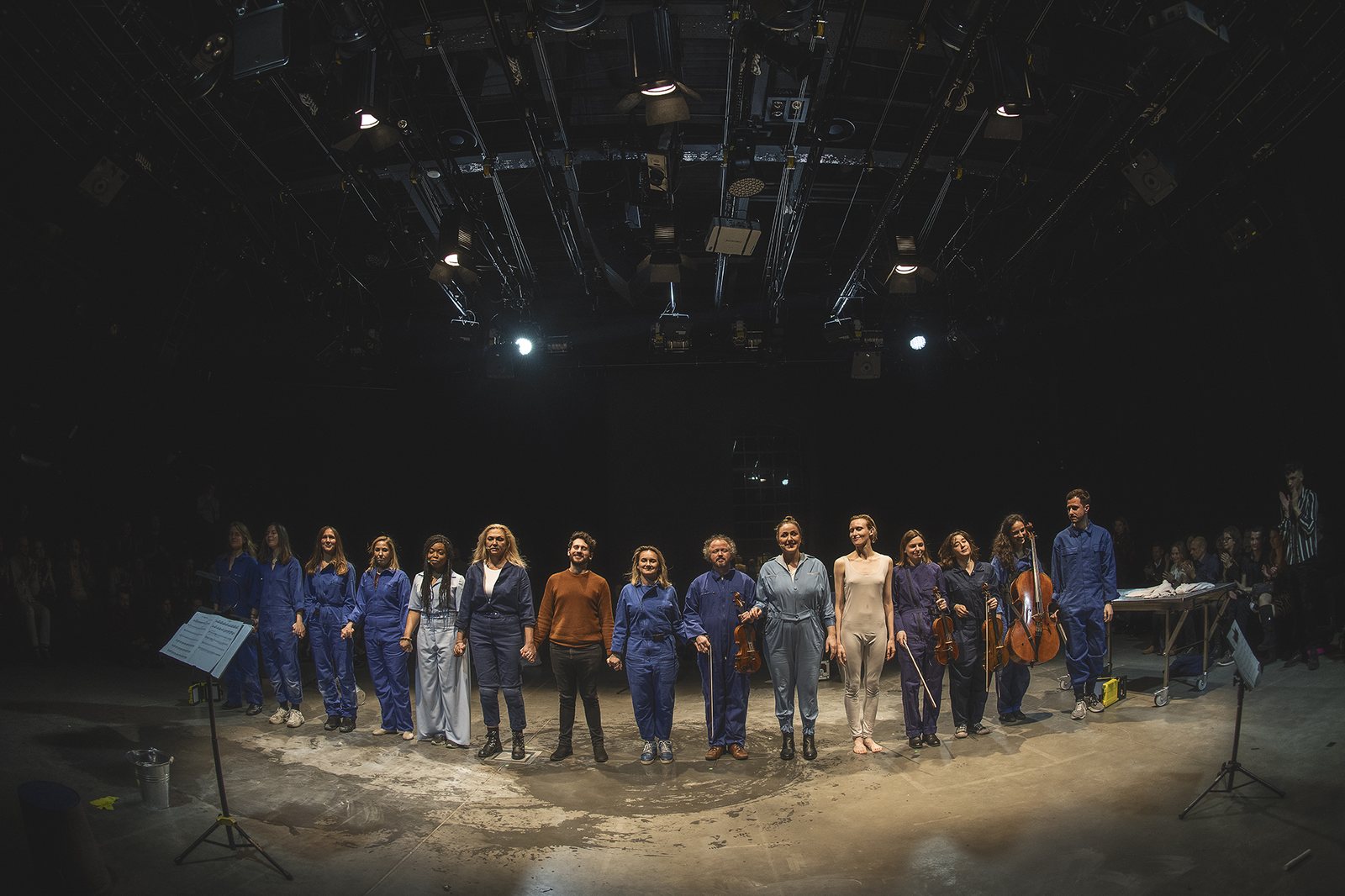
From Silencing to Listening: Opera-Installation as Cross-Cultural Medium for Afghan Women’s Voices
Paper presented at the Art of Research conference at Aalto University (2026)
Summary
Unknown, I Live With You (2018) was built around a problem: how do you bring clandestine writings by Afghan women into a Western artistic space without reproducing the very structures that silenced them? This paper, written as a member of The Airport Society collective, traces the formal decisions behind the opera-installation — venue, costume, casting, composition, audience placement, temporal structure — and argues that each one was an ethical choice as much as an artistic one.
At the heart of the argument is opera’s fundamental strength: a form where music, staging, dramaturgy, costume, and space are genuinely co-equal, demanding total presence from its audience. The paper asks whether that quality can be turned against opera’s own colonial tendencies — and whether a non-hierarchical working process, from democratic decision-making to shared yoga sessions before rehearsals, can mirror and reinforce what happens on the stage.
The paper will be presented at the Art of Research 2026 conference at Aalto University. It is currently available as a preprint on SocArXiv.
Links
Preprint: From Silencing to Listening — SocArXiv
Related links:
Unknown, I Live With You — OperaVision · Afghan Women’s Writing ProjectConference: https://events.aalto.fi/en/3X3IKxA7/g/82Z1zDshz8/art-of-research-2026-4a3bQtTRKz/overview
Citation
Głowicka, Kasia. 2026. “From Silencing to Listening: Opera-Installation as Cross-Cultural Medium for Afghan Women’s Voices.” Preprint. SocArXiv. https://osf.io/preprints/socarxiv/m2hnq_v1.
Jun 2026Conference paper - The Space In-Between: Creative Skill and Cognitive Transitions in the Age of Prompt-Based AI (CHIWORK
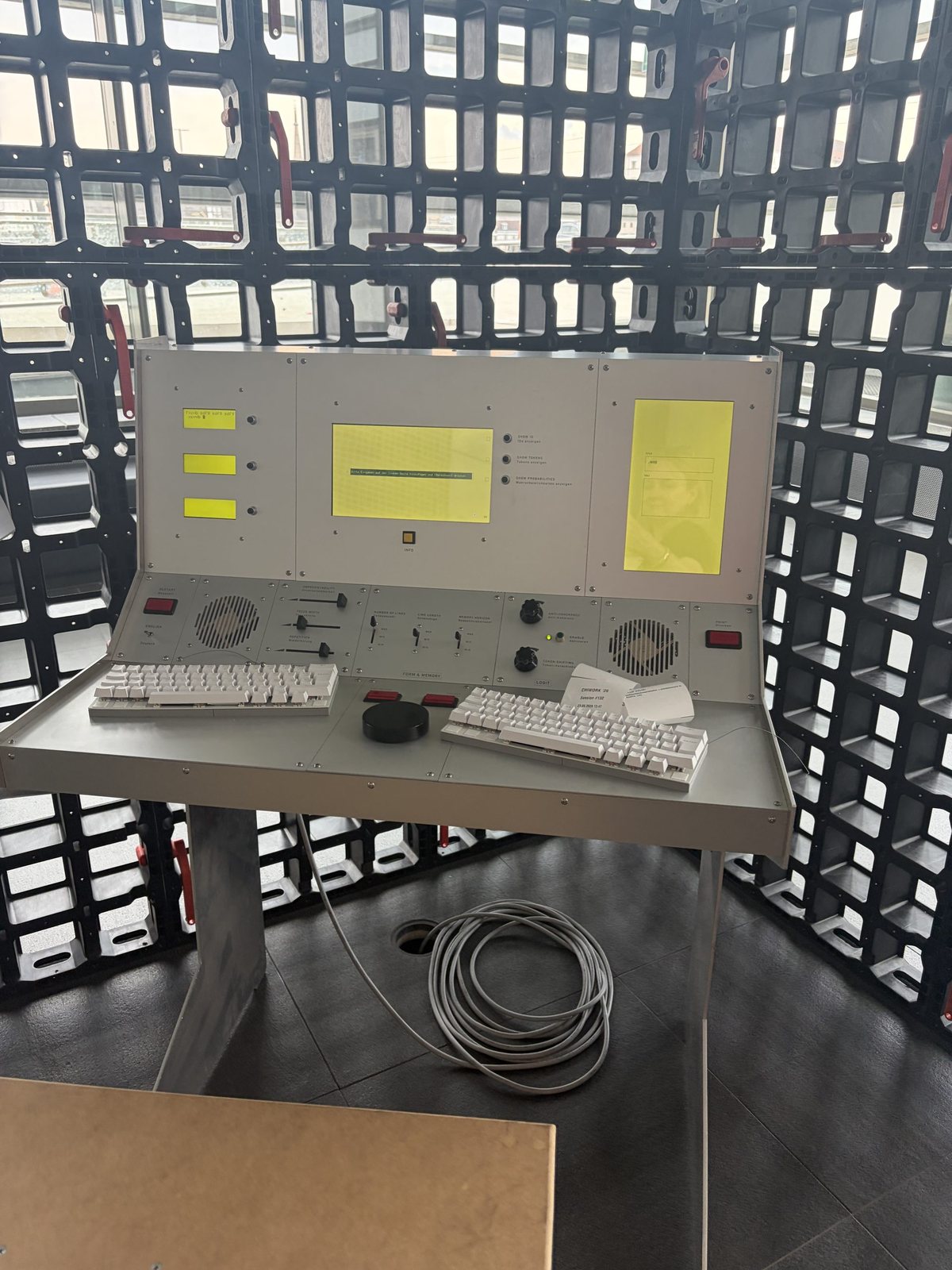
The Space In-Between: Creative Skill and Cognitive Transitions in the Age of Prompt-Based AI
Paper presented at the Agency and Skill in Human-AI Interaction workshop, CHIWORK ’26 — the 5th Symposium on Human-Computer Interaction for Work
Summary
Recent neuroscientific evidence is beginning to suggest that prompt-based interaction with large language models reduces brain connectivity and cognitive engagement compared to unaided creative work. For creative practitioners, this is not a peripheral concern — it points to a structural deskilling effect built into how generative AI tools are currently designed.
This paper proposes a practical concept for mitigating that effect: a model of two cognitive modes and three intersections between them, derived from my own compositional practice in algorithmic composition twenty years before generative AI tools became widely available. The framework identifies a single mechanism behind the deskilling effect of prompt-based systems — the elimination of transitions between cognitive modes — and argues that re-introducing those transitions is a teachable, practicable form of resistance.
The argument is grounded historically in Opalescence (2004/5), a piece for three female singers and electronics I composed during my practice-based PhD research at Queen’s University Belfast. At that time, working with algorithmic composition meant something categorically different from what “using AI” means today: there was no prompt field, no conversational layer. To get a system to produce material at all, one had to compose the system itself. Revisiting that practice from a 2026 vantage point makes visible what the prompt-response paradigm has eliminated: the transitions between modes of creative thinking that the cognitive science literature, from Wallas (1926) through to current neuroimaging studies, identifies as the site of creative skill development.
The paper closes with a provocation directed at the creative industry. The same analysis that applies to my own compositional practice applies, with local variation, to advertising, architecture, film, fashion, journalism, design, and the visual arts. What looks today like a productivity gain may, in this reading, be the accelerated obsolescence of an industry’s own workforce. The transition is the skill, and the work now is to make the space between modes inhabitable — in practice, in pedagogy, and eventually in the design of the tools themselves.
Links
Paper (workshop GitHub): Full text HERE
Workshop programme: https://agency-and-skill.github.io
Conference: https://chiwork.org/26/
Citation
Głowicka, K. The Space In-Between: Creative Skill and Cognitive Transitions in the Age of Prompt-Based AI. 5th Symposium on Human-Computer Interaction for Work, Agency and Skill in Human-AI Interaction Workshop, 2026. https://agency-and-skill.github.io/submissions/Glowicka\_2026\_Creative-Skill-and-Cognitive-Transitions-in-the-Age-of-Prompt-Based-AI\_CHIWORK.pdf
Jun 2026The Space In-Between — presented at CHIWORK, Linz
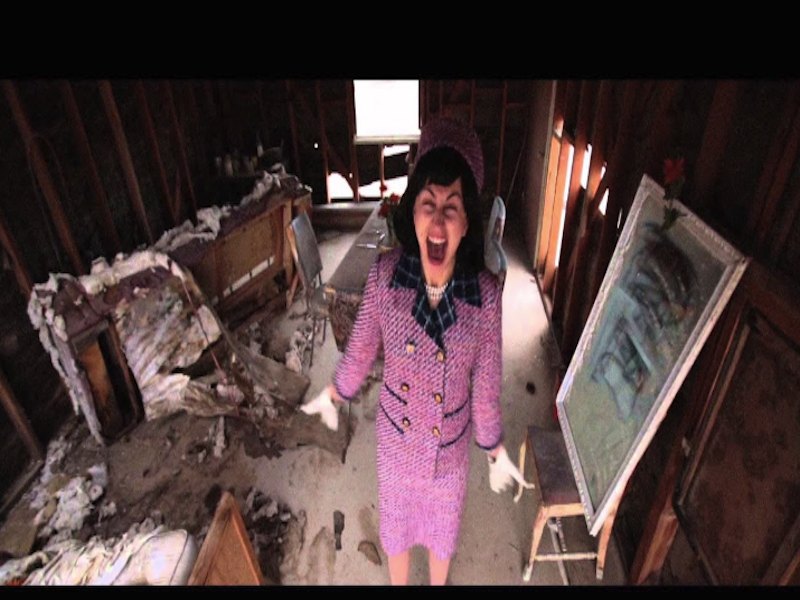
The Space In-Between: Creative Skill and Cognitive Transitions in the Age of Prompt-Based AI was presented at CHIWORK 2026 in Linz.
The question underneath it: when the tools generate, what happens to the skill that used to live in the making?
Sept 2025Article - Why We Still Need to keep making Music in the Age of AI
“it’s not only about what humans create—it’s about how creating makes us human.”
The Struggle Is the Point: Why Human Music-Making Matters in the Age of AI
Originally published at journal.crps.ai on September 22, 2025
In this article, Kasia Głowicka explores why the messy, time-consuming process of creating music is not just valuable—it’s essential to our humanity, even as AI can now generate songs in seconds.
Drawing on neuroscience, creativity research, and her own transformative experiences with composition, she makes a compelling case for why the creative struggle itself is non-negotiable.
The Essential Question Explored
As Kasia frames it: “Why endure the messy, time-consuming frustration of human creativity when a machine can do it within few clicks of a keyboard?”
Her answer is clear: Because the struggle itself is the healing, the growth, the essence of creativity. AI can serve as a tool for rapid prototyping and inspiration. But it cannot replace the fundamental human need to process our experiences through creative expression.
Read the full essay on Medium →
This essay resonates deeply with the philosophy behind works like “Unknown, I Live with You,” where the process of giving voice to silenced stories becomes as important as the finished opera itself.
Jun 2025'profound experience' Kozińska on 'Unknown, I live with you'
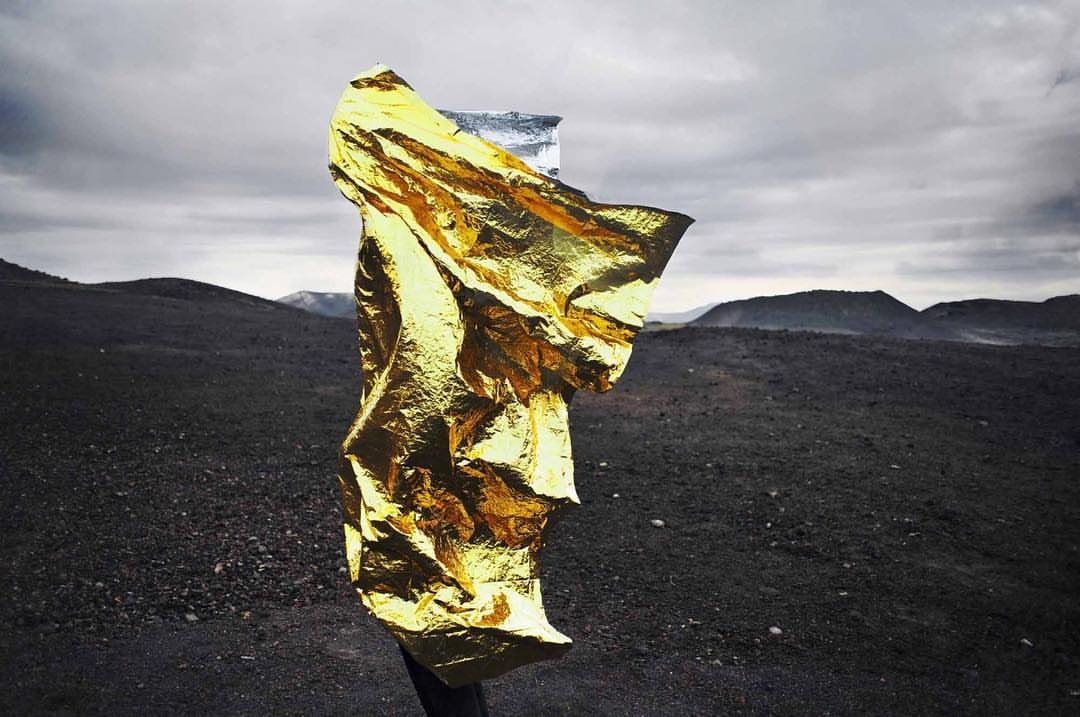
Dorota Kozińska describes her impressions from her visit to the dress rehearsal and the premiere in Brussels:
“I entered this space in the dark, surrounded by the music of Glowicka: minimalistic, hazy, but at the same time bursting with underlying emotion. A moment later, from the sounds of string quartet and live electronics, human voices emerged – the register-wandering voice of Lucia Lucas and the poignant scream of dancer Gala Moody. All good and bad memories from Afghanistan crossed my mind. The trauma was back. My doubts were gone. I knew already that the next day I will come face to face with the musicians, who profoundly experienced the tragedy of Afghan women and do not want to just reinterpret it, but to simply understand it.
Read more: http://atorod.pl
translation by Natalia Copeland
Jun 2025Saga of Sage — original soundtrack released
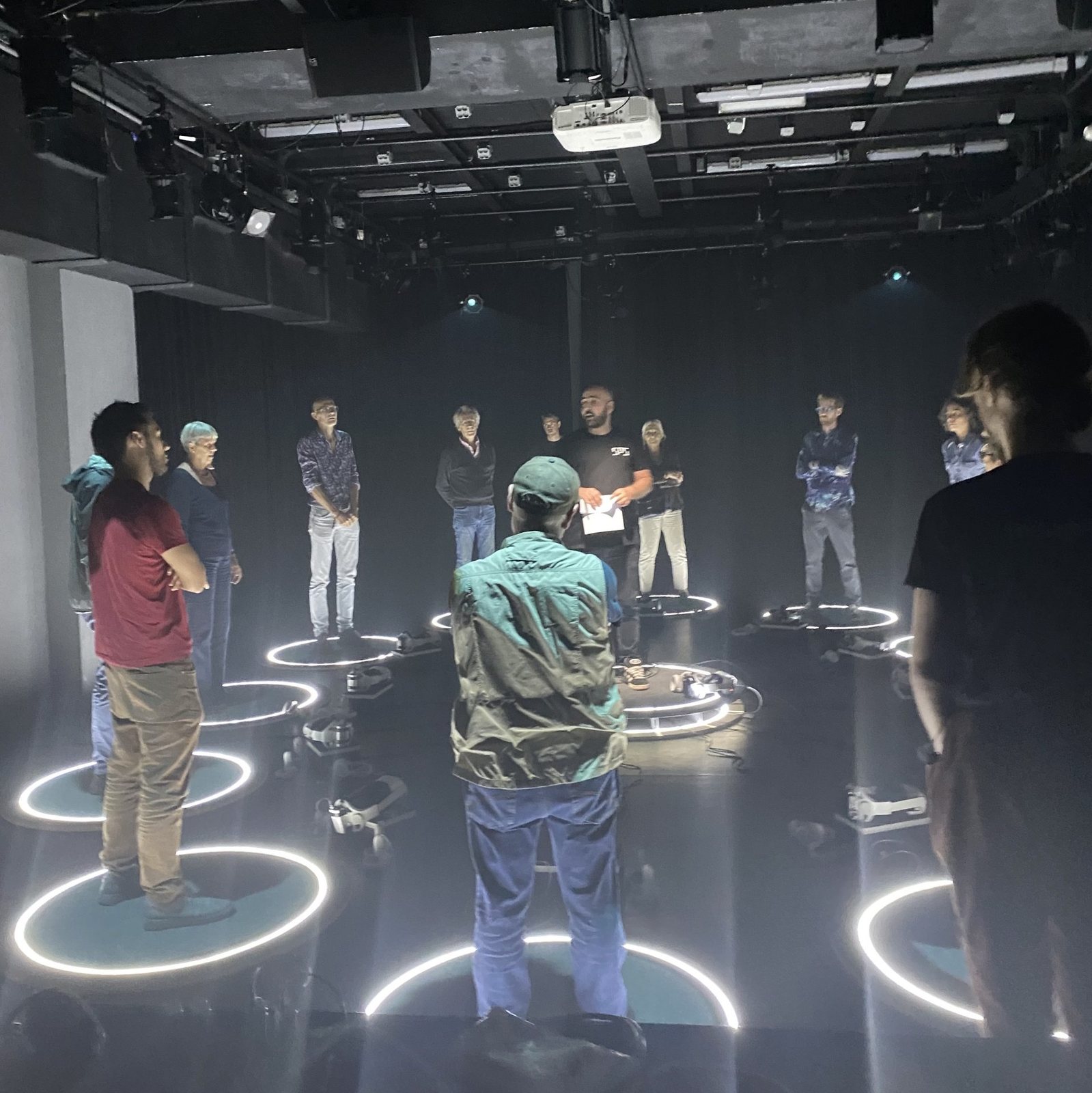
The soundtrack to the VR opera Saga of Sage is out, with five tracks written for the immersive performance in which twelve players share a virtual planet.
The film and the album are both on the work’s page.
Mar 2025Book - Testing the waters
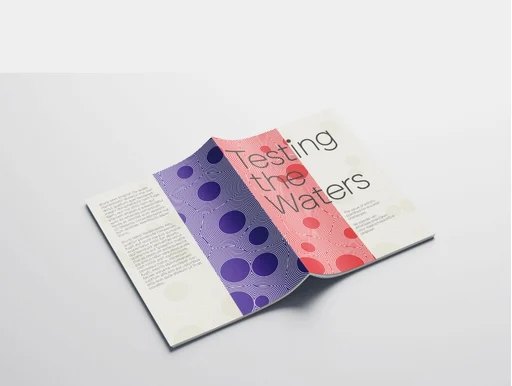
book
Testing the Waters is a publication by CoECi (Centre of Expertise for Creative Innovation) that explores how the arts can contribute to social change without losing their unique power. Through essays, reflections, and examples, the book dives into the dynamic space where art, research, and education meet, asking how creative practices can be both critical and caring in a time of societal transformation. It aims to inspire artists, educators, and researchers to engage with complex social issues in a meaningful and responsible way.
Głowicka’s contribution offers a chapter that brings forward examples of art engaged with communities that are often marginalised, silenced, or overlooked. Her contribution focuses on how artistic practices can act as bridges—connecting with unserved voices and fostering a sense of recognition and agency through creative expression. Drawing from both established and emerging projects, Głowicka highlights the ethical and transformative potential of the arts when rooted in real community relationships.
Reference: De Waal, M., Idema, M., Steffen, E., Glowicka, K., Neves Alves, B., Van der Weiden, N. enHee-jeong Choi, J. (2025)
Link to the full text: Testing the waters
Jan 2025Ruch Muzyczny reviews Afterparty at Teatr Studio
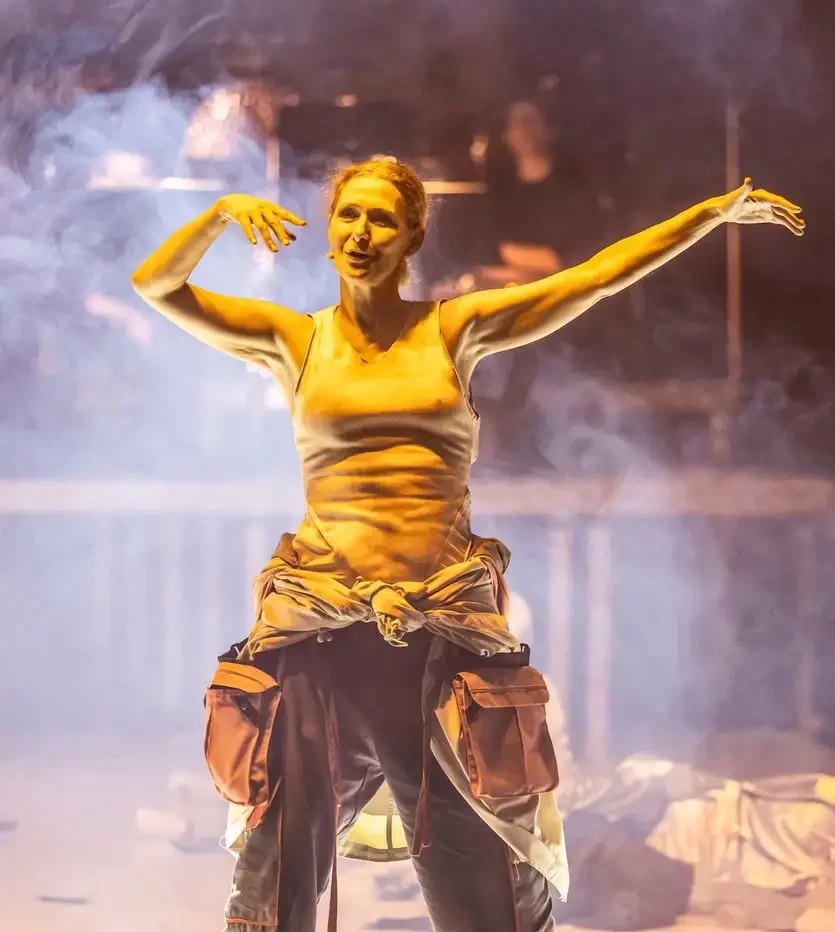
Justyna Miguła reviews Mahagonny – ein Songspiel / Afterparty in the Polish music magazine Ruch Muzyczny (issue 1/2025), under the title “Biegnij dalej sam” (“Keep running alone”).
She describes Krystian Lada’s staging as a diptych separated by almost a hundred years and joined by one theme: a city that was meant to be ideal and brings pain and disappointment. Of the second part she writes that Głowicka’s music grows sparser and simpler with each song, as the characters shed their clothes and, in a kind of emotional confession, become part of a community supporting one another. She singles out the final a cappella song, sung by all the characters at the back of the stage, and praises the cast: the dramatic actors “coped brilliantly” with the sung parts.
Photographs by Natalia Kabanow.
Dec 2024Rzeczpospolita reviews Afterparty at Teatr Studio
Jacek Marczyński reviews the premiere of AFTERPARTY at Teatr Studio in Rzeczpospolita, under the headline “Warsaw is as greedy as the old Mahagonny” (“Warszawa jest pazerna jak dawne Mahagonny”).
The production sets Weill and Brecht’s Mahagonny in a modern fitness club. For the Afterparty part, the critic writes that the music by Kasia Głowicka and the lyrics by Bartosz “Fisz” Waglewski give the original characters a more concrete, contemporary dimension.
Dec 2024Article in Vogue
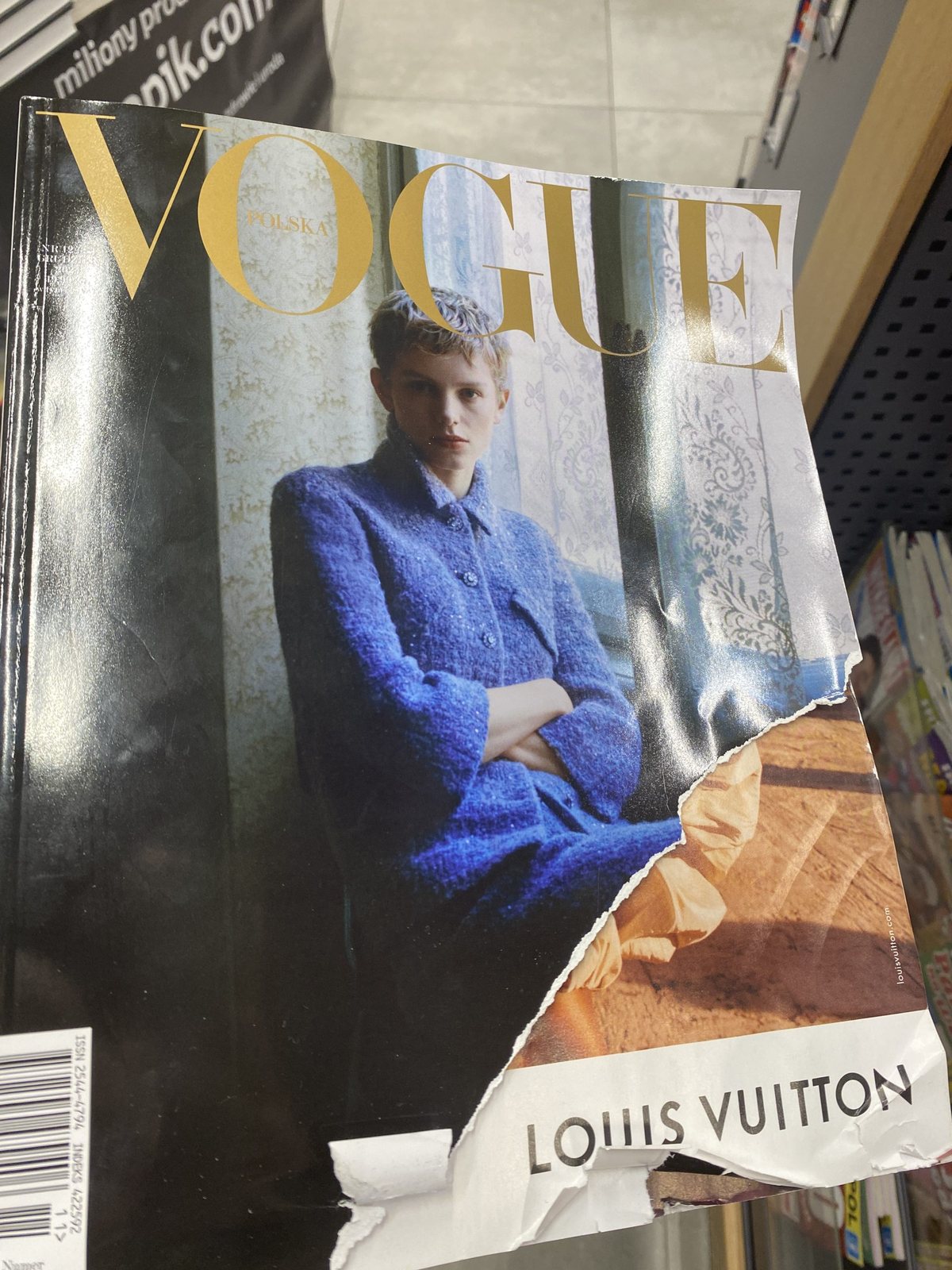
Kasia Głowicka Featured in Vogue December 2024 Edition (PL).
I’m thrilled to share that I’ve been featured in the December 2024 issue of Vogue! The article dives into my involvement in the production of Mahagonny—a modern interpretation of Kurt Weill and Bertolt Brecht’s Rise and Fall of the City of Mahagonny. This captivating opera combines timeless themes of desire, loss, and societal collapse, resonating deeply with contemporary issues.
Under the direction of Krystian Lada, we explored a fresh and bold approach, merging music, drama, and visual storytelling to reflect today’s turbulent world. The production is a powerful dialogue between past and present, brought to life with innovative staging and a unique musical vision.
It’s an honor to be part of such an insightful feature and to collaborate with incredible artists pushing the boundaries of opera and theater.
For those interested, you can find the article in Vogue’s latest edition (Polish edition, December). Stay tuned for more updates and behind-the-scenes insights about Mahagonny—a production that is as relevant today as ever.
Dec 2024Afterparty premieres at Teatr Studio, Warsaw
AFTERPARTY: A Post-Utopian Songspiel premiered at Teatr Studio in Warsaw, directed by Krystian Lada, with lyrics by Bartosz “Fisz” Waglewski.
The evening pairs Weill and Brecht’s Mahagonny — Ein Songspiel with a contemporary response written for today’s Warsaw. Supported in part by the Kurt Weill Foundation for Music.
Dec 2024Dutch FOUNDATION for literature grant
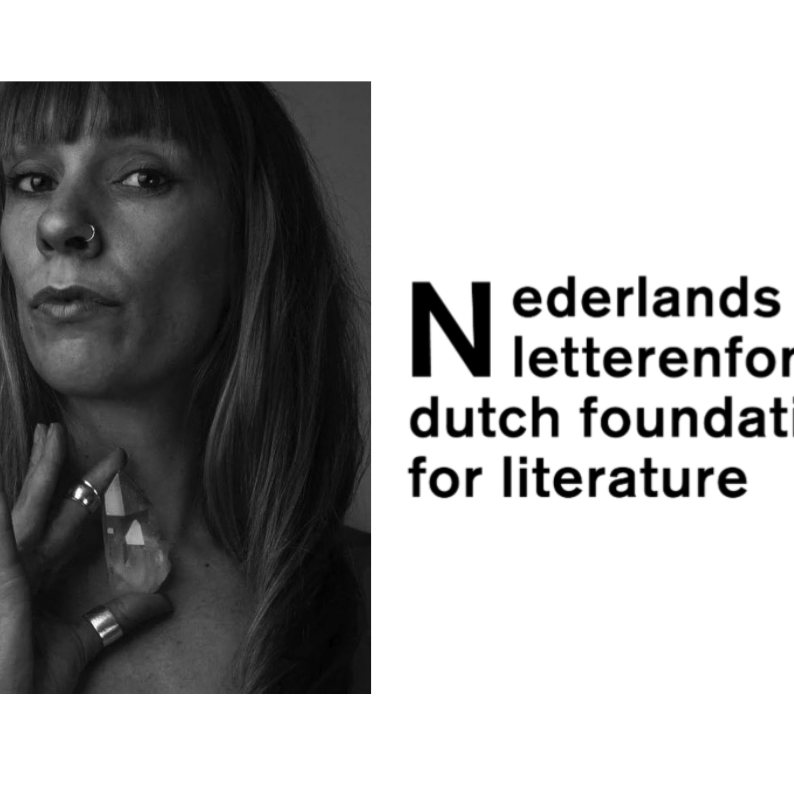
Prestigious Dutch Literature Grant (Nederlands Letterenfonds/ Dutch Foundation for Literature) has been awarded for Glowicka’s project collaborator, Sjaan Flikweert, for a new collaboration.
In the coming year, Sjaan and will be embarking on a new and inspiring journey with the project, delving into the world of emotions and self-discovery.
Dec 2024Interview and broadcast 'deep Down'
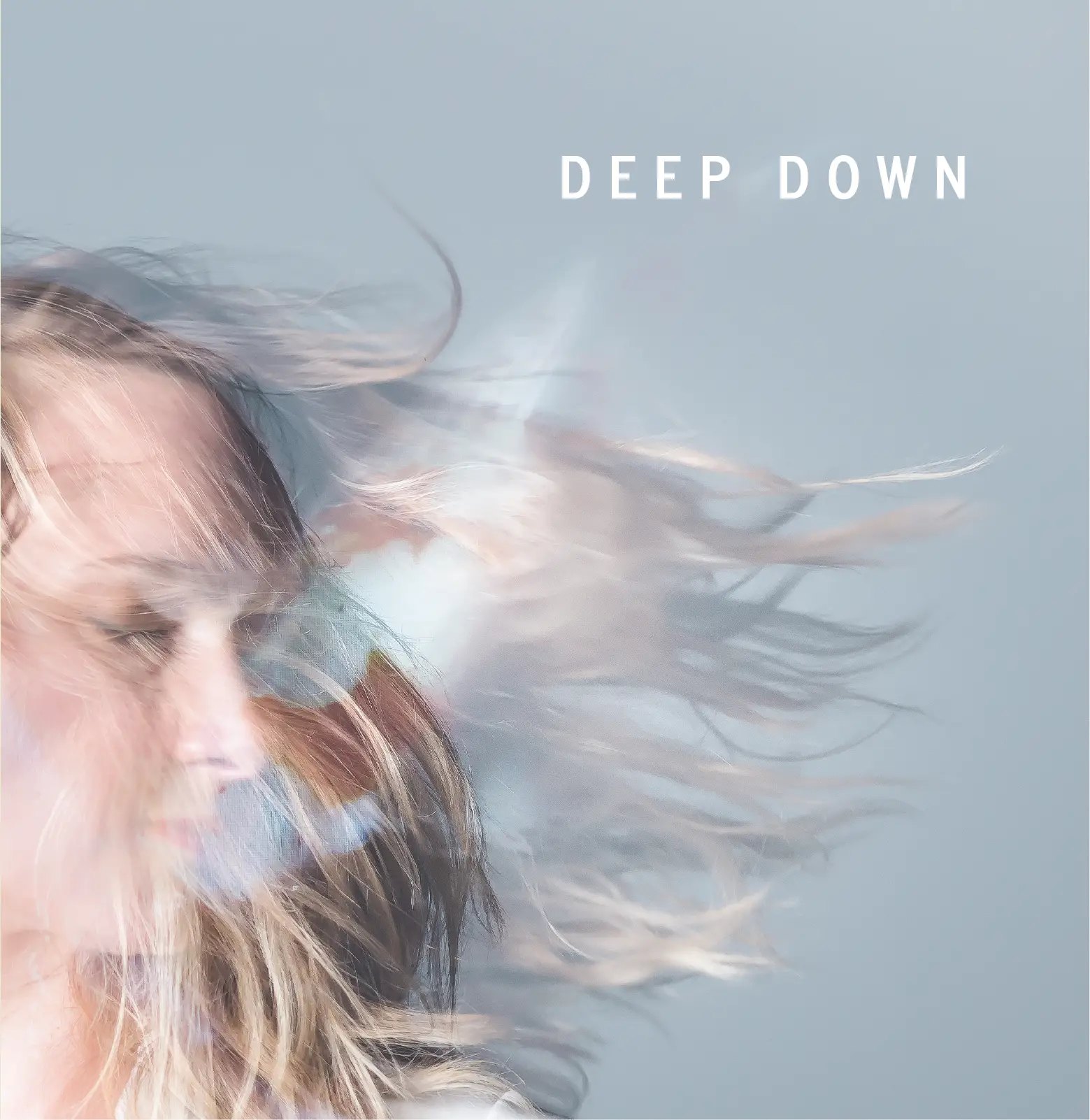
So, a little late to the party (classic me!), but guess what? My tunes invaded Dwójka - Program 2 Polskiego Radia not once, but twice! First, they slipped a few tracks from my latest album into the Nokturn show on the 5th of October. Then, they went all-in on the “Nowa Polska” show on 26th of October, dedicating a whole evening to my creations.
I had a chat with Ewa Szczecinska about inspirations, beginnings, and all that jazz. If you’re curious to listen to some talk in Polish or just need some background noise, check out the recording of the show below.
Thanks to everyone who tunes in!
Dec 2024Review 'Unknown, I live with you'
Thrilled to share yet another review of “Unknown, I live with you” by German online magazine Rattlermag:
“Polish composer Kasia Głowicka explores the junctions between extended techniques of operatic voice and the dramatic potential of live electronics. The emotionality of the folk-inspired melodies meets minimalism of form. It expresses the harshness of the living circumstances of the Afghani writers but as well the power of the female voice striving for emancipation. Sung by a collective of three singers who represent different visions of female/ male dynamics and potential of the human voice. Three strong women create the cast of the performance: the Polish opera diva Malgorzata Walewska, the American star of young generation Raehann Bryce-Davis and the transsexual opera singer Lucia Lucas.
Sept 2024Post with Vimeo Video
This is some dummy copy. You’re not really supposed to read this dummy copy, it is just a place holder for people who need some type to visualize what the actual copy might look like if it were real content.
If you want to read, I might suggest a good book, perhaps Hemingway or Melville. That’s why they call it, the dummy copy. This, of course, is not the real copy for this entry. Rest assured, the words will expand the concept. With clarity. Conviction. And a little wit.
In today’s competitive market environment, the body copy of your entry must lead the reader through a series of disarmingly simple thoughts.
Jul 2024Aero Photography
This is some dummy copy. You’re not really supposed to read this dummy copy, it is just a place holder for people who need some type to visualize what the actual copy might look like if it were real content.
If you want to read, I might suggest a good book, perhaps Melville. That’s why they call it, the dummy copy. This, of course, is not the real copy for this entry. Rest assured, the words will expand the concept. With clarity. Conviction. And a little wit.
In today’s competitive market environment, the body copy of your entry must lead the reader through a series of disarmingly simple thoughts.
All your supporting arguments must be communicated with simplicity and charm. And in such a way that the reader will read on. (After all, that’s a reader’s job: to read, isn’t it?) And by the time your readers have reached this point in the finished copy, you will have convinced them that you not only respect their intelligence, but you also understand their needs as consumers.
As a result of which, your entry will repay your efforts. Take your sales; simply put, they will rise. Likewise your credibility. There’s every chance your competitors will wish they’d placed this entry, not you. While your customers will have probably forgotten that your competitors even exist. Which brings us, by a somewhat circuitous route, to another small point, but one which we feel should be raised.
May 2024My weekend in Yosemite
Suspendisse potenti. Nunc ipsum felis, ullamcorper id suscipit vitae, pellentesque eget lectus. Pellentesque habitant morbi tristique senectus et netus et malesuada fames ac turpis egestas. Maecenas condimentum rutrum nisl, at fermentum turpis vulputate quis. Curabitur placerat gravida tempor. Praesent in lacus diam. Lorem ipsum dolor sit amet, consectetur adipiscing elit. Maecenas quis imperdiet augue. Donec aliquet fermentum tempus. Nullam sodales bibendum purus, a adipiscing lorem auctor quis. Nullam egestas cursus rhoncus. Phasellus eu lectus felis.
Pellentesque habitant morbi tristique senectus et netus et malesuada fames ac turpis egestas. Vestibulum tortor quam, feugiat vitae, ultricies eget, tempor sit amet, ante. Donec eu libero sit amet quam egestas semper. Aenean ultricies mi vitae est. Mauris placerat eleifend leo. Quisque sit amet est et sapien ullamcorper pharetra. Vestibulum erat wisi, condimentum sed, commodo vitae, ornare sit amet, wisi. Aenean fermentum, elit eget tincidunt condimentum, eros ipsum rutrum orci, sagittis tempus lacus enim ac dui. Donec non enim in turpis pulvinar facilisis. Ut felis. Praesent dapibus, neque id cursus faucibus, tortor neque egestas augue, eu vulputate magna eros eu erat. Aliquam erat volutpat. Nam dui mi, tincidunt quis, accumsan porttitor, facilisis luctus, metus.
Apr 2024Interview with Arts Talk Radio Holland
Guest Interviewee
Episode aired on ArtsTalk Radio (2024)In this podcast episode, Michael Hasted talks to The Hague-based Polish composer and writer Kasia Głowicka about her creative work and her recent radio play LILIAN, exploring themes of memory, identity, and female voices in sound art. The episode also features an interview with comedian Greg Shapiro about his new book The American Netherlander. Recorded at the Diligentia Theatre in The Hague.
Listen to the full episode here (Kasia Głowicka @16:02 min).
Dec 2023Interview on Comenius senior fellowship award
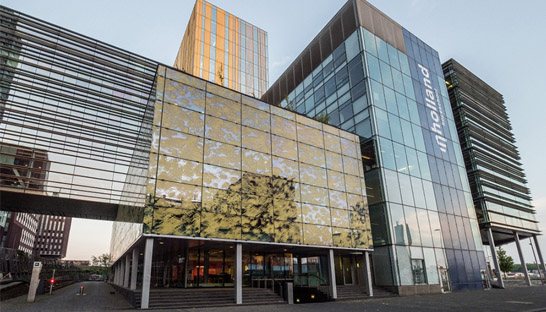
Natalie Gils interviewed me on the occasion of receiving the Comenius Senior Fellowship.
I am thrilled to share exciting news about the progress of the Lectoraat Authentic Leadership at InHolland, where I am privileged to collaborate on innovative projects that explore the intersections of creativity, leadership, and education.
Recently, I received Comenius Senior Fellowship and the VIS (Virtual Internationalizational Sammenwerking) subsidy. These grants represent a significant step forward in promoting innovative and impactful approaches to leadership education and cross-cultural collaboration.
As part of this initiative, I am contributing to the development of projects that integrate arts-based methods, immersive technologies, and personal development strategies. These tools are designed to inspire resilience, creativity, and authentic connections in educational and professional environments.
Specifically, the VIS project leverages immersive technologies like VR to bridge geographical distances and foster meaningful collaboration across cultural and institutional boundaries. This aligns closely with my ongoing work on VR projects such as VIS, which begins its development phase this November.
The Comenius grant highlights the importance of leadership in shaping the future of education. It enables us to continue creating innovative curricula that empower both students and professionals to lead with authenticity and purpose.
Read the news here:
https://www.inholland.nl/nieuws/comenius--en-vis-subsidies-voor-lectoraat-authentic-leadership
Oct 2023'Music Perfect for Autumn': Polskie Radio Features Głowicka's 'Deep Down'
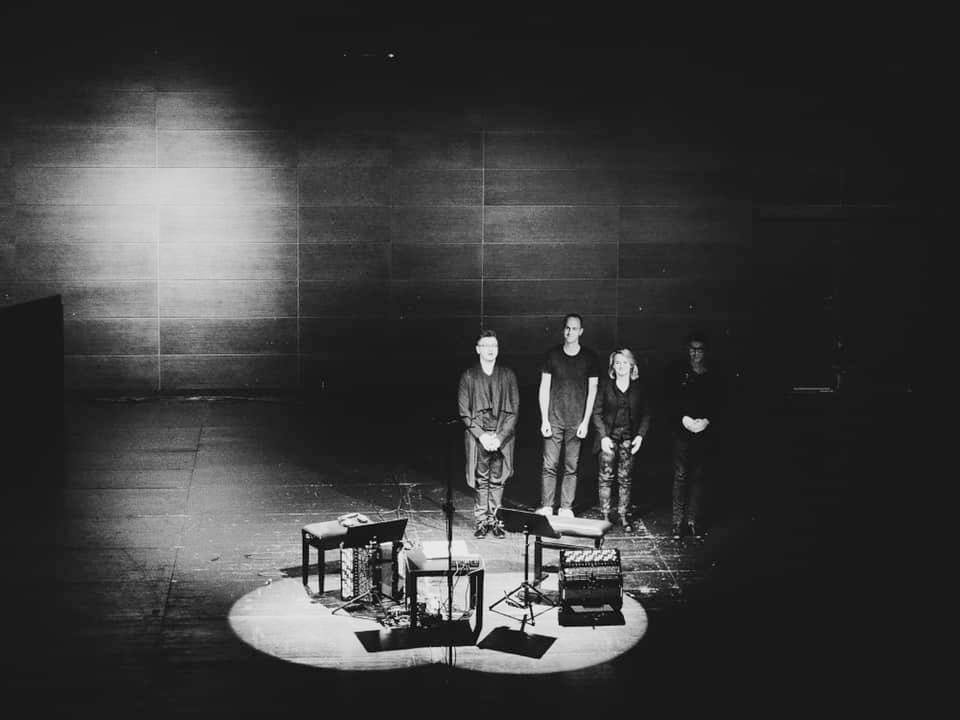
Featured on Polskie Radio Dwójka: Host Ewa Szczecińska explores Katarzyna Głowicka’s latest album “Deep Down”—intimate electronic miniatures wrapped in autumn mist and introspection.
In the “Nowa Polska” (New Poland) series—a program dedicated to the most important works of Polish contemporary music from the last three decades—composer Katarzyna Głowicka discusses her newest album released under the pseudonym Glou, and her lifelong journey with electronic music.
About “Deep Down”
The album consists of seven miniatures, some carrying deeply personal messages. As Głowicka explains in the broadcast, these pieces take on special dimension during autumn fogs and the approaching days of November—a season that seems made for minimalist music wrapped in electronics.
The collection creates an intimate sonic landscape that bridges personal narrative with abstract electronic exploration, showcasing the composer’s distinctive approach to electronic composition that has accompanied her creative searches since her youngest years.
Track Listing
- Venice in Amber (4:53)
- Deep Down (4:03)
- Music box for a Lost Child (4:08)
- A Night Ahead (2:14)
- Polar Pulse (4:20)
- Sand Storm (5:10)
- Questioning at the door (4:08)
Released on ARTEk Sounds, 2023
Why This Matters
The feature on Polskie Radio—Poland’s national public broadcaster—highlights Głowicka’s dual identity as both an opera composer tackling urgent social issues and an electronic music artist creating introspective, personal works. Her ability to move between the intimate world of ambient electronics and the monumental space of socially engaged opera demonstrates the breadth of her artistic vision.
The “Nowa Polska” series places contemporary Polish composers in conversation with their work, documenting the evolution of Polish music since 1989. Głowicka’s inclusion underscores her significance in Poland’s contemporary music landscape.
Listen to the full broadcast on Polskie Radio →
“Nowa Polska” / Polskie Radio Dwójka
Host: Ewa Szczecińska
Broadcast: October 26, 2023 at 22:15
Duration: 55:16About the Series: “Nowa Polska” is dedicated to the most important works of Polish contemporary music from the last three decades, beginning from 1989.
Oct 2021MEA Kultura: 'Unknown, I Live With You' — from engaged opera to intercultural performance (part I)
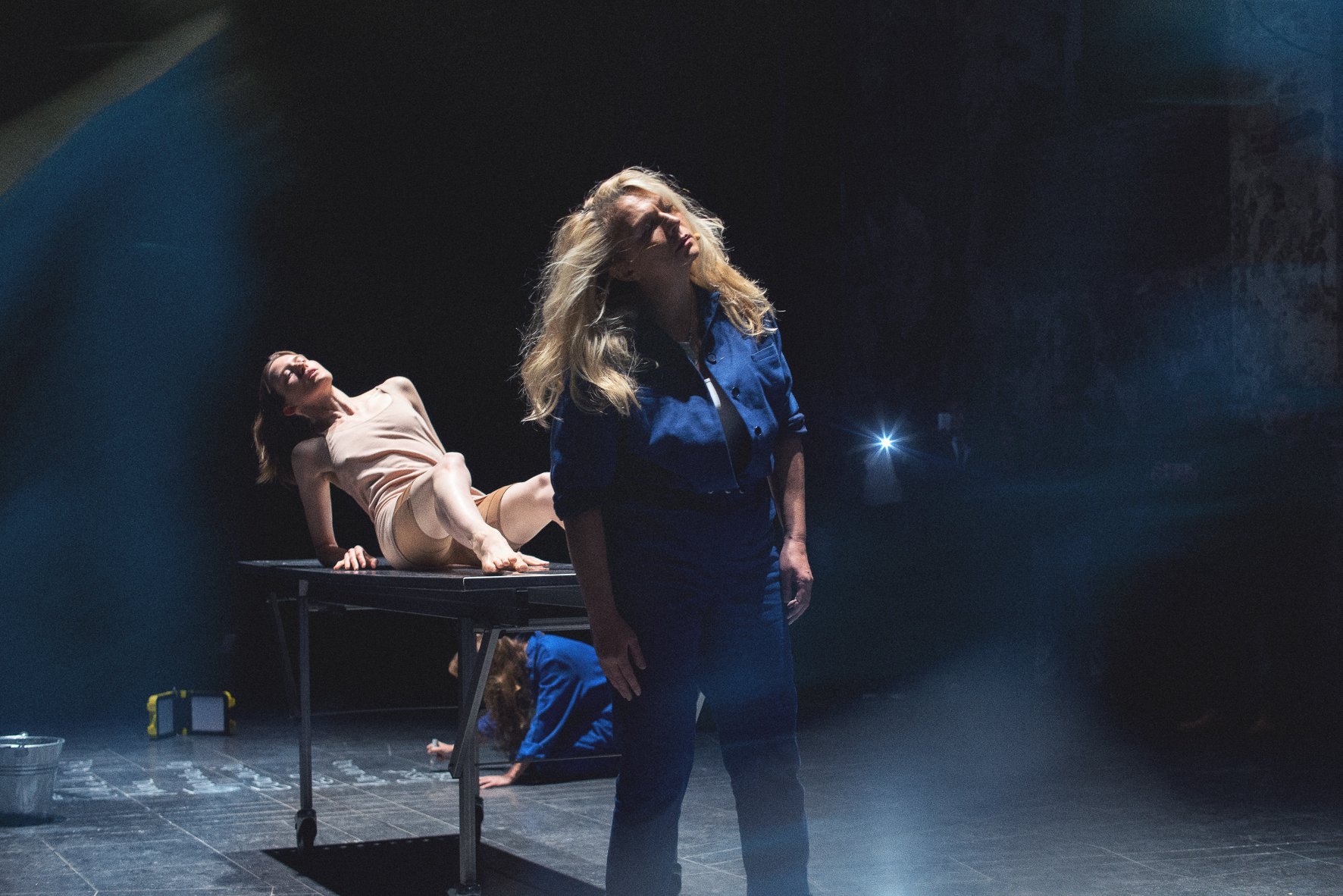
The first part of Zuzanna Hwang-Cempla’s two-part study examines Unknown, I Live With You as engaged art addressing women’s rights in Afghanistan. Drawing on Erika Fischer-Lichte’s performance theory, it looks at embodiment, spatiality, sonority and temporality to show how the opera-installation goes beyond traditional opera conventions and works as a tool for social awareness.
Oct 2021MEA Kultura: 'Unknown, I Live With You' — from engaged opera to intercultural performance (part II)
The second part of Zuzanna Hwang-Cempla’s study turns to the music and structure of Unknown, I Live With You: the string quartet and electronics, the multimedia prologue referencing Schumann and the Pygmalion myth, and the three-part triptych. It traces rhetorical figures, minimalist repetition and recurring motifs, especially the number three and water imagery.
Jun 2021'Complex, yet accessible' Interview at 'Ruch Muzyczny'.
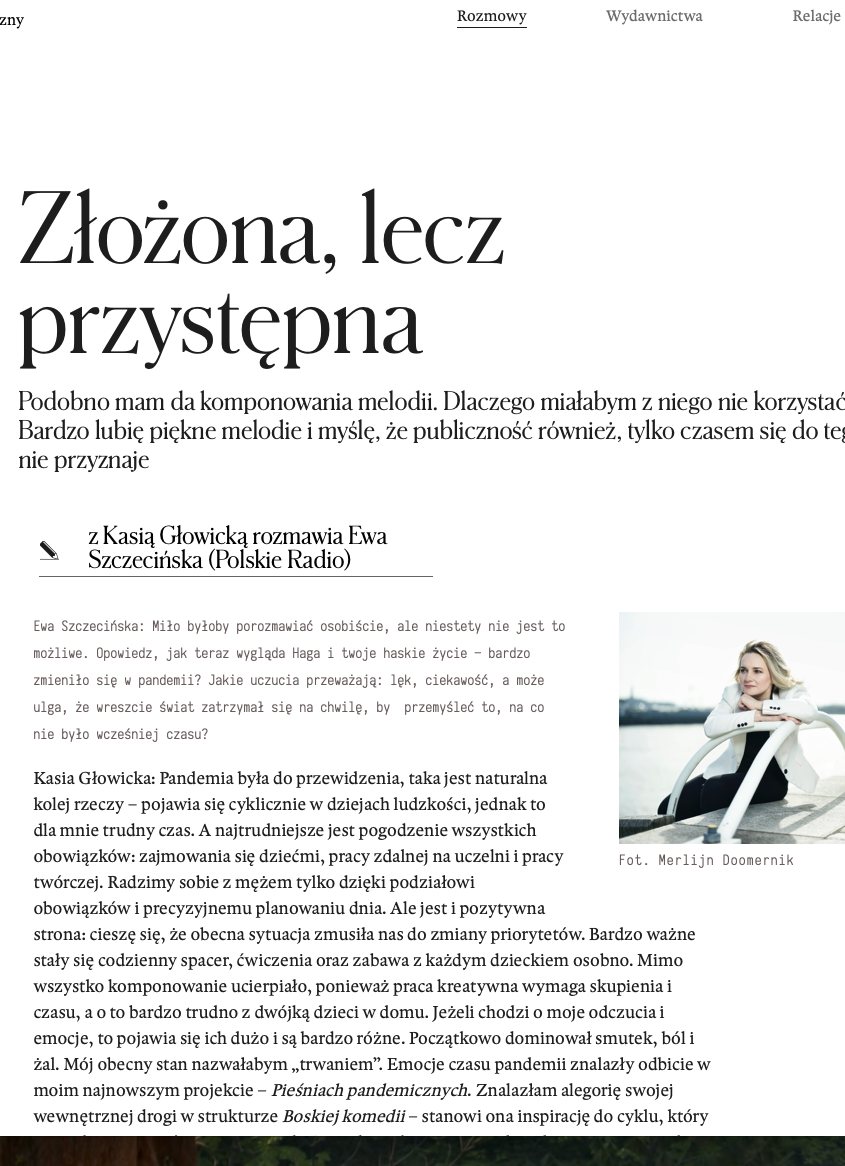
Complex, yet accessible - Interview with Ewa Szczecińska at “Ruch Muzyczny”. “Supposedly I have a GIFT to compose a melody. Why should I not use it? I like beautiful melodies a lot and I think the audience does not admit it too, but sometimes they DON’T admit it. “ [caption id=“attachment_5282” align=“aligncenter” width=“360”] Nederland, Rotterdam, 1 april 2021 Katarzyna Glowcka Componist Foto: Merlijn Doomernik Alle rechten voorbehouden / All rights reserved[/caption] photo: Merlijn Doomernik
Jun 2021On the cover of 'Ruch Muzyczny'
Kasia on the cover of the May issue of the leading Polish Music Magazine “Ruch Muzyzny” (Music Movement) Ruch Muzyczny | Issue 9, 2021 |
[/et_pb_text][/et_pb_column][/et_pb_row][/et_pb_section]
Apr 2021April
Early spring months brought 2 film projects seeing premieres. “Sync” was premiered at Cine Dans Festival in Amsterdam, and promotional video for Penderecki’s Garden was premiered online. A brand new single - “Music in 3 parts” have been published on Spotify and other streaming services. Kasia has also been appointed researcher at InHolland Business University of Applied Science, where she is part of Authentic Leadership Lab, finding new ways of skill development thru arts. New scores: “Luminescence” and “She walks in beauty” have also been published by Donemus Publishing.
Jan 2021'Artforum', New York, reviews 'Audiosphere'
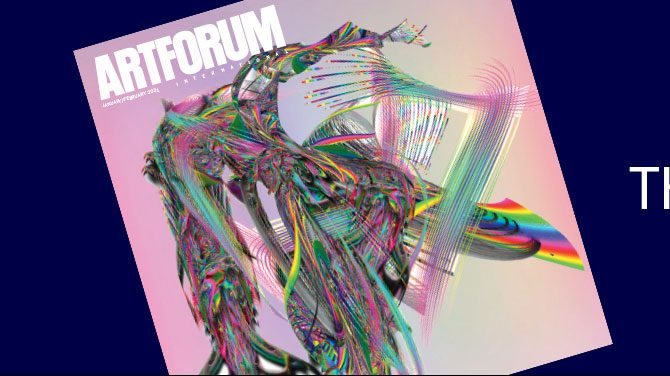
Insightful article on renowned artforum about the Exhibiton ““Audiosphere: Social Experimental Audio, Pre- and Post-Internet”; where my piece “I thought it was dream, but when I woke up I couldn’t walk” is part of.
Here you can read the whole review.
Jan 2021From Engaged Opera to Intercultural Performance: A Deep Dive into Głowicka's 'Unknown, I Live with You'
Zuzanna Hwang-Cempla explores how Katarzyna Głowicka’s opera-installation transforms Afghan women’s poetry into a powerful act of resistance and solidarity.
In her newly published article, musicologist Zuzanna Hwang-Cempla examines “Unknown, I Live with You”—a groundbreaking work by composer Katarzyna Głowicka and director Krystian Lada that challenges everything we think we know about contemporary opera.
Key Takeaways
Opera as Political Action: Five years ago, critic Marcin Bogucki declared opera a “living corpse” that tries to “escape from the world rather than confront it.” Głowicka and Lada’s work proves him wrong, directly confronting the brutal reality faced by women in Afghanistan.
Authentic Voices: The libretto uses texts by Afghan women from the Afghan Women’s Writing Project, giving voice to those systematically silenced. These aren’t dramatic fictions—they’re real testimonies of forbidden love, lost dignity, stolen childhoods, and defiant hope.
Breaking Opera’s Rules: Premiered as a six-hour installation in Brussels where audiences could come and go freely, the work dissolves boundaries between opera, performance art, and installation—what the creators call an “opera-installation.”
From Athens to Kabul: Hwang-Cempla draws a devastating parallel between ancient Athenian democracy (which excluded two-thirds of the population) and 21st-century Afghanistan, where being born female means systematic denial of basic human rights.
Performance Theory Meets Practice: The article analyzes the work through Erika Fischer-Lichte’s concept of performative reality production, examining how physicality, spatiality, sound, and temporality create meaning beyond traditional operatic conventions.
As we navigate conversations about women’s rights, artistic responsibility, and the role of culture in social change, Hwang-Cempla’s analysis offers crucial insights into how contemporary music can serve as both witness and weapon in the fight for human dignity.