News
Page 2 of 3
Jan 2021Review of 'Lilian' at Culture Plug

Renowned Dutch critic Els van Swol takes on Lilian in her series “Culture plug” (De cultuurstekker )at 8weekly.nl LILIAN is a counterpart to film Notturno - a powerful documentary by Gianfranco Rosi. “The radio play lasts a little over twenty-four minutes, but life, survival, continues. Twenty-four hours a day.” With thanks to Miriam van Reisen.
Jan 2021Great review by '8weekly' magazine

In her series “De cultuurstekker” (the culture plug) Els van Swol reviews “Lilian” at 8weekly magazine with great words: “The radio play lasts a little over twenty-four minutes, but life, survival, continues. Twenty-four hours a day. Yet hope remains alive, like the impending day in Notturno. Hope for a cure, for survival, for contact, for people who sympathize and want to vouch for each other. That keeps people going. “
Below fragments in original Dutch:
Het hoorspel van Kasia Głowicka begint met piepjes. Het is het geluid van een sms’je dat een Eritrese man, Tesfay, die in Libië gevangen zit in het Zitan Detention Centre, stuurt aan Lilian, professor mensenrechten. Hij vond haar nummer in een gsm die hij had geleend. Lilian zit op dat moment te ontbijten en je hoort de dagelijkse geluiden daarvan op de achtergrond. Rammelende bordjes geven een ritme aan alsof het slagwerkinstrumenten zijn. Je hoort een man herhaaldelijk roepen dat het tijd is, gevolgd door stilte, want ook in dit hoorspel zit veel stilte, dodelijke stiltes, zware stiltes, hier gevolgd door elektronica en pianoklanken. Deze geluiden vormen samen de ouverture, gelijk Notturno een intro kent. Daarna komt ook hier het verhaal op gang.
Weer hoor je piepjes, maar dat kunnen nu ook die van een hartbewakingsapparaat in het ziekenhuis zijn; het geluid is even dubbel als het beeld van de man in de kano in *Notturno.*Je hoort een vrouwenstem: ‘How are you?’ De ontvangst stoort. Weer klinkt elektronica, je hoort stemmen. En weer: ‘How are you?’ van Lilian aan Tesfay. Er volgt een stilte en vervormde pianoklanken. En dan: ‘How is she today? How was the night?’ Het gaat over de dochter in het ziekenhuis. De klanken van de muziek zijn donker, als de nacht in Notturno.
Lilian gaat fluisterend verder tegen Tesfay. Hij vertelt haar, dat alle vluchtelingen huilen, worden geslagen en dat sommigen worden verkracht. Opnieuw klinken ritmisch piepjes, als in een echokamer opgenomen. De piepjes van de sms’jes en de hartbewakingsmachine lijken zich met elkaar te vermengen. Op leven en dood.
Lilian en Tesfay praten verder. Tesfay is ten einde raad en wil naar Nederland komen, naar Lilian en haar gezin om te trouwen met een van haar verwanten. De verpleegster zegt tegen Lilian, dat zij naar huis moet gaan om te slapen, maar ze blijft en wil de hand van het kind vasthouden. En misschien in gedachten ook die van Tesfay, zo ver weg zonder dat ze veel voor hem kan doen. Het hoorspel is ten einde.
Het hoorspel duurt iets meer dan vierentwintig minuten, maar het leven, het overleven, gaat door. Vierentwintig uur per etmaal. Toch blijft ook de hoop levend, zoals de nakende dag in *Notturno.*Hoop op genezing, op overleven, op contact, op mensen die met elkaar meeleven en voor elkaar willen instaan. Dat houdt mensen op de been.”
Dec 2020'Opera Wire' magazine calls 'Lilian' a psychological masterwork

Polina Lyapustina calls “Lilian” “…A Psychological Masterwork That Will Leave You Begging for the Single Sound of Music” in her review.
Fragments from the review:
“The refugee crisis is a difficult topic, and so I presumed that pure emotions would become a sure guide in writing this review. But in fact, it took me two weeks to simply explain—first, to myself—how am I going to convince you to listen to this undoubtedly important yet unbearably difficult piece.
The radio play “Lilian,” which I’m not calling an opera, will show you more horrors of reality than you are used to seeing. This piece makes you discover the weakest and the most frightening parts inside of your self even though it says nothing directly about you.”
To read the whole review go to Opera Wire - here is the link to the review.
You can listen to Lilian here:
https://open.spotify.com/track/5CybqzjFP1QymZHYolc7ee?si=qEarHwCWSvSaQ50EB-HIGg
Dec 2020Renowned Opera Vision streaming of 'Unknown, I live with you'
OperaVision, Europe’s premier free streaming platform for opera, has added Unknown, I Live With You to its collection—bringing this groundbreaking opera-installation to audiences worldwide.
The platform, which streams productions from leading opera houses across 17 countries, features the work alongside its catalogue of the world’s most celebrated operas. This marks a significant recognition of Katarzyna Głowicka and Krystian Lada’s innovative piece as essential contemporary opera.
Why This Matters
OperaVision’s decision to stream Unknown, I Live With You coincides with Opera Europa and the European Concert Hall Organisation’s Afghanistan Charter—a commitment to support the visibility of Afghan music and musicians launched on World Opera Day 2021.
The production spotlights poignant poems by contemporary Afghan writers known as Roya, Meena Z., Fattemah AH and Freshta, who participated in the Afghan Women’s Writing Project and dared to defy rules under Taliban regime. In Taliban-ruled Afghanistan, writing and artistic expression were outlawed, making these anonymous testimonies a rare glimpse into unfiltered reality.
What You’ll Experience
Filmed in Brussels at Les Brigittines, a former Baroque chapel turned performing arts space, the installation allows viewers to witness an intimate, immersive performance where audience and performers share the same space. The production features:
- Polish mezzo-soprano Małgorzata Walewska
- American mezzo Raehann Bryce-Davis
- American transgender baritone Lucia Lucas
- Katarzyna Głowicka’s avant-garde score merging operatic voice with live electronics
- A string quartet and dancer in a unique triptych structure
By dismantling the convention of frontal staging, the performance urges viewers to leave behind the categories of ‘us’ and ‘them’, creating a space where Afghan women’s voices exist not as distant suffering but as immediate, undeniable presence.
Watch “Unknown, I Live With You” on OperaVision →
OperaVision is a free streaming service offering opera performances from Europe’s leading houses. The platform is funded by the European Union’s Creative Europe programme.
Dec 2020ArtsTalk Magazine and radio - interview and broadcast with Michael Hasted.
Michael Hasted from ArtsTalk Magazine talks to me (@16.02 mins)about my work and about the radio play LILIAN.
Transcript of the talk:
LILIAN, the debut radio play from award-winning composer Kasia Głowicka, who lives in The Hague, will have its Dutch premiere on ArtsTalk Radio at the beginning of January.
Based on a true story and using real WhatsApp message transcripts as its source material, LILIAN takes us into the lives of a refugee trapped in the notorious Zitan Detention Centre in Libya and the human rights professor who is trying to aid him from her home in Europe.
The source material for this play is an extensive archive ofWhatsApp messages exchanged between a real-life professor and a young Eritrean man trapped in a Libyan refugee camp. How did you come to hear about it?
Several years ago I organized a seminar about Alan Turing, the computing pioneer. Professor Mirjam van Reisen was one of the speakers. She lectures on Computing for Society at Leiden University and she is absolutely fascinating to listen to.
We kept in touch after the seminar. One day, when I was visiting her at her office in Brussels, she revealed to me that she was in communication with a young man being held in the Zintan Detention Centre in Libya.
He had found her number on a document somewhere, stored it in a borrowed cellphone and then used WhatsApp to message her and plead for help with his situation. by the time she told me about it, they had been in communication for around eighteen months. When it was all printed out, it ran to 350 pages.
Although they were on different continents and really living in different worlds, through this constant messaging they became a daily presence in each others’ lives. It wasn’t just text: he would send her pictures and videos of the camp, things which were happening to him and around him.
This young man was living through so much trauma on a daily basis but bureaucracy moves so slowly. What was it like for her, over the course of that eighteen months, to be trying to help him but unable to make anything happen quickly?
She’s a professor and a mother, so her day-to-day life is busy. Sometimes it was hard for her to balance that with her efforts to help this young man.
She would be physically present but her mind would be on Libya, or a new message would arrive and immediately draw her into this world again. At times she felt she was living two different lives simultaneously. She also felt a lot of guilt, both for not being fully present and available for her family and also for being safe from harm while Tesfay was at risk every day.
At the same time, there were often moments of humour in their conversations. Her daughter watches a reality TV show called Love Island. The show’s concept is simple – until you find yourself trying to explain it in writing to someone who comes from a completely different culture.
What made you decide to turn this story into a radio play?
The transcript lay on my desk for a while. I knew I wanted to do something with it, but wasn’t sure exactly what format. I was thinking about some sort of interactive project, but then Warsaw Autumn approached me with the offer to write a radio play for this year’s festival.
At first I declined, because I’ve never done one before, but that was kind of the point of the offer: the festival likes to take artists out of their comfort zone. So then my mind turned towards this story and how it could be adapted into a radio play.
It was an interesting challenge for me because not only was it my first radio play, it was also the first time anyone would be attempting to take a WhatsApp conversation – complete with photos, emojis and so on – and try and adapt that into a performative work.
In the end I felt like I could do it. I had some experience with writing when I was younger and it probably would have been an alternative career for me had I not chosen music. Also, as a composer, you already have a sort of sense for the elements of drama, such as creating suspense and shock and so on.
What are you hoping listeners will take away fromLILIAN?**
For me, it’s a story which illustrates the power of hope. Two people from different worlds are united by their shared sense of humanity. Both are going through dark times – in the play, her character has a comatose daughter on life support – but they never lose hope and they carry each other through.
It also touches on some themes which are very relevant to our times. The refugee crisis has mostly disappeared from the front pages in Europe but remains a daily struggle for thousands of people.
As a sort of background character in the play, WhatsApp illustrates the power of technology to connect people no matter where they are in the world. People can be in each other’s lives despite being separated by geography and other barriers.
I’ve witnessed first-hand how a shared sense of suffering can unite people. I arrived in the Netherlands in 2001 to study music at the Royal Music Conservatory just a few days before 9/11 happened.
Back then the fees were very low, which meant that students came from all over the world: America, South America, Asia, Africa, everywhere. The community was amazing. When 9/11 happened, there was this sudden camaraderie. Everyone came together in an empathy of pain as they we tried to understand what had happened and how the world was about to change.
Right now are are living through another global-level event. The coronavirus has brought the world almost to a halt for the past six months. Did that have any effect on producingLILIAN?**
Usually a play would like this would bring everyone together in a studio, so there’s a uniform recording level and the voice actors can feed off each other. Because of travel restrictions, all the recording had to be done remotely.
That was a challenge but it was also an opportunity. I wanted to maintain as much authenticity as possible, so I worked remotely with a voice actor in Europe and a voice actor in Africa. That distance between the voice actors also mirrored the distance between the real-life protagonists.
There were some technical issues. The European voice actor had access to better recording facilities than the voice actor in Africa did – he had no noise-cancelling microphone, for instance – so there was some work to be done in getting the qualities similar. But I’m very pleased with how it all turned out.
Dec 2020News for December
“Luminescence” will be performed during the Festival Dag in de Branding’s award ceremony for Yannis Kyriakides on 12th of December 2020.
GOK choir, Dutch Choir Music NOW project, and conductor Benjamin Goodson made a recording which will be part of Dutch Choir Music Now initiative and prestigious string Quartett “Kwartet Slazki” together with Polish National Radio and TV Orchestra NOSPR commissioned a new piece for 2021.
Dec 2020'Startling image' - review at WysokieObcasy.pl
Tomasz Domagała writes a strong review of “Unknown, I live with you” in Gazeta.pl
Dec 2020Awarded BUMA/Stemra grant

Honoured to receive investment grant for music “Investeringsfonds Muziek” of BUMA/STEMRA.
The grant is intended for the development of new music and new exploitation of existing music. I will be working on releasing music written for several theater works and some new pieces in a joined release “Vacationing Heart.“It is best described as melancholic piano music. Good for a rainy, gloomy pandemic time.
Oct 2020'reshapes operatic experience' Araszkiewicz on 'Unknown, I live with you'
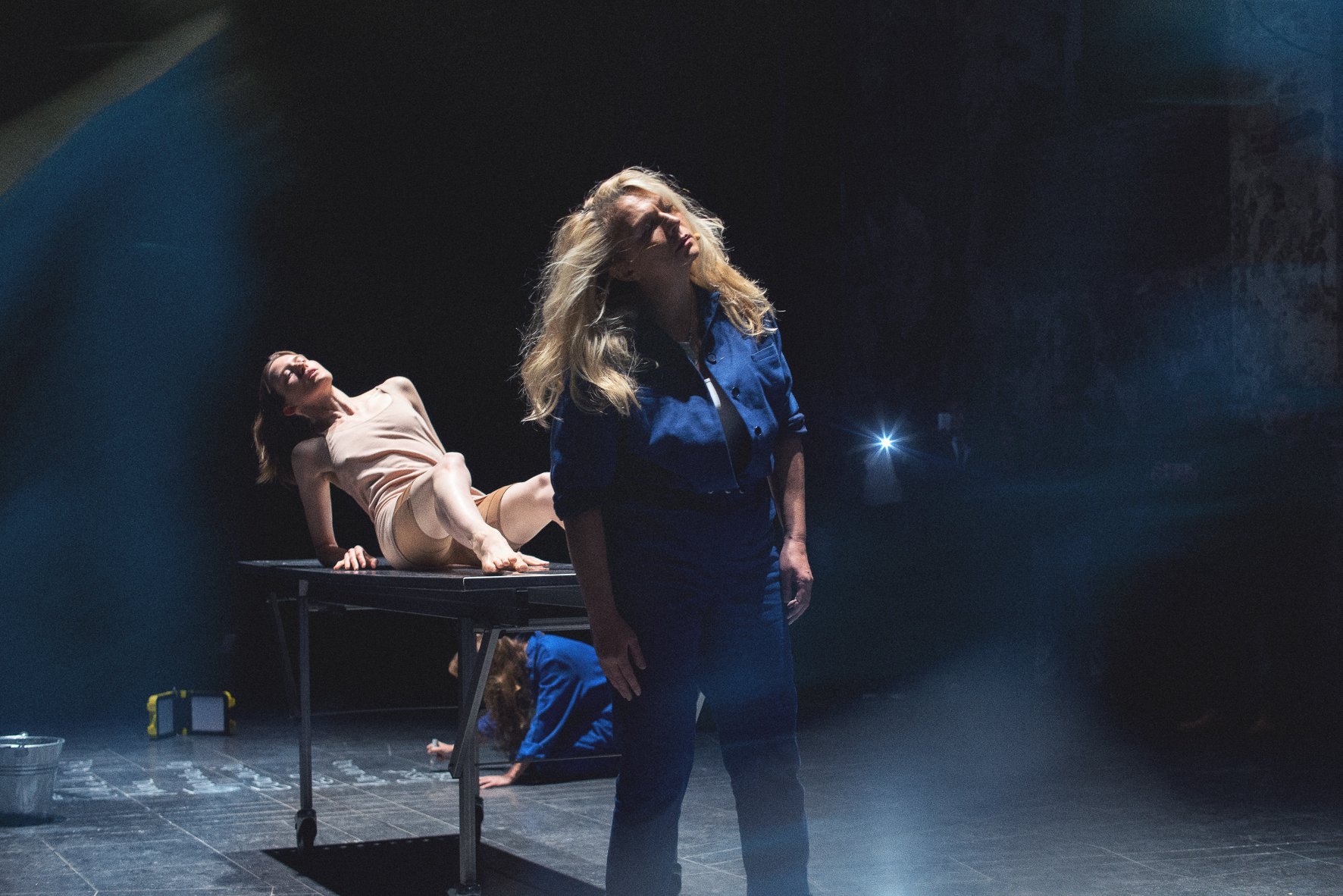
Composer Kasia Głowicka’s music responds to this (…) perfectly: it is designed to express the monotony of oppression and the explosive moments of revolt. The sounds of the string quartet and live electronics interact through unsettling contradiction, playing out the story of abuse and vulnerability. In doing so, they push their performance towards a hymn that surprises with the tenderness and intimacy of the experience of fighting violence. “Unknown, I Live with You,” divided, fragmented, and perhaps with something killed inside me. However, my experience will always remain in you. It is uniquely carried by the statuesque and emotional voice of Polish opera star Małgorzata Walewska. Her performance brings an overwhelming sense of despair but also a peculiar tenacity. Californian singer and transgender woman, Lucia Lucas offers a rare and brilliant bass-baritone that intertwines with falsetto in a vital dialogue between a victim and executioner, bringing the disturbing effect of a disjointed and broken narrative. With her soft and captivating mezzo-soprano, the African-American singer Raehann Bryce-Davis goes beyond complaints and sufferings, and finally unites the tensions of this excellent dramaturgy in her song of freedom and inspiring dream.
Unknown, I Live With You by Katarzyna Głowicka and The Airport Society. Photo by Camille Cooken.
The opera-installation Unknown, I Live with You offers an interweave of sex, oppression, and singing that renews or shapes new traditions of opera. By performing various perspectives of minorities, its female heroines paradoxically not only sing their independent integrity and act out their intimate (hi)stories, they also become active agents of a larger, communal history. By doing so, they profoundly change this history’s deeply moving significance.
Agata Araszkiewicz
Sept 2020Publication on Broadway World
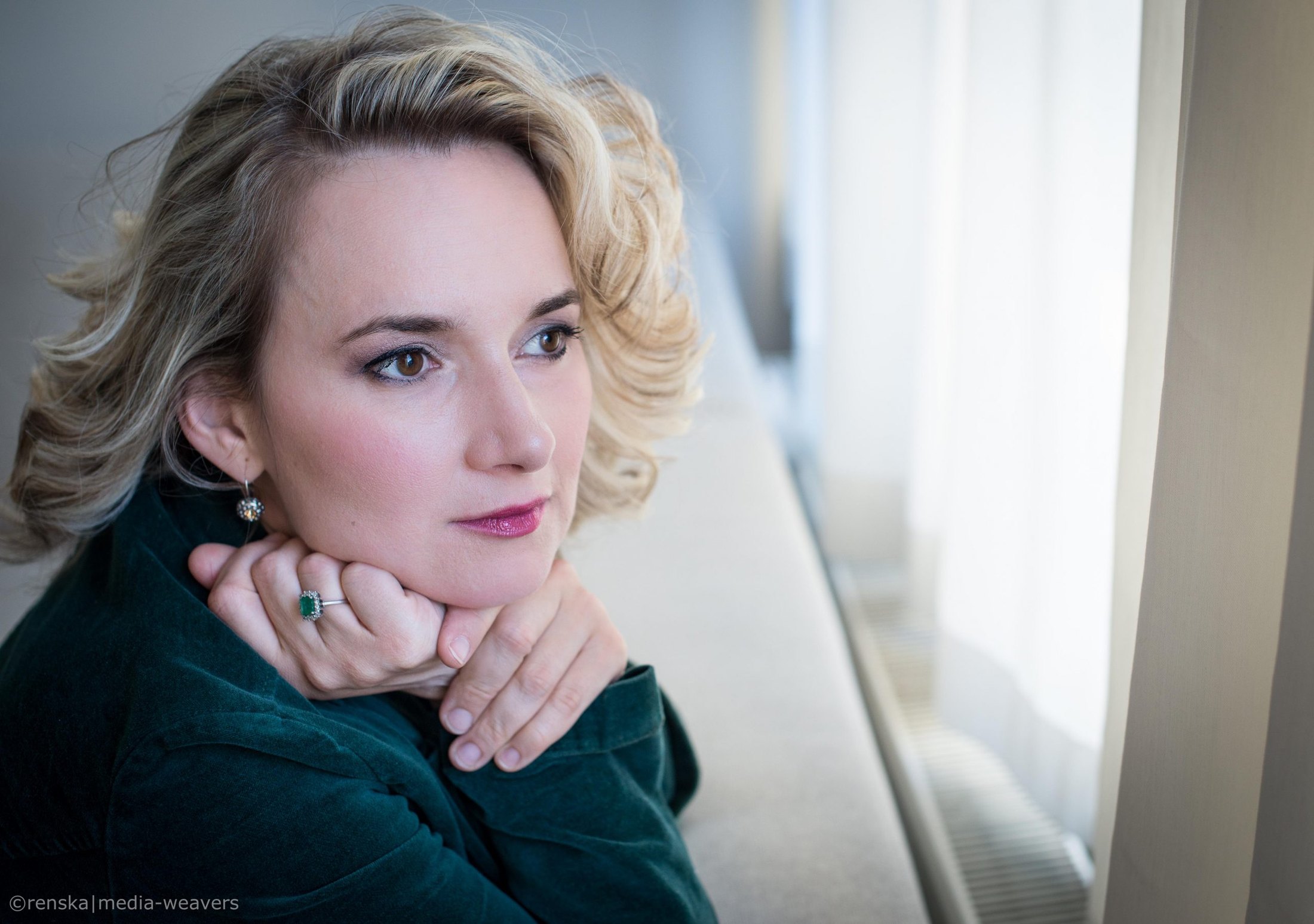
Broadway World features the award-winning composer, Kasia Głowicka’s radioplay drama entitled, “LILIAN.” This new radio play which was premiered last Friday, September 18 as part of the annual Warsaw Autumn cultural festival was based on a true story.
Lilian was based on real events documented in a 350-page transcript of WhatsApp conversations between a European professor of human rights and a refugee in Libya.
To know more about the publication, you may click this.
Sept 2020Review on The Theater Times

The Theatre Times reviewed “LILIAN,” a radioplay drama by an award-winning composer Głowicka. This was based on a true story using real WhatsApp message transcripts as its source material. It takes us into the lives of a refugee trapped in the notorious Zitan Detention Centre and the human rights professor who is trying to aid him from her home in Europe.
Sept 2020October
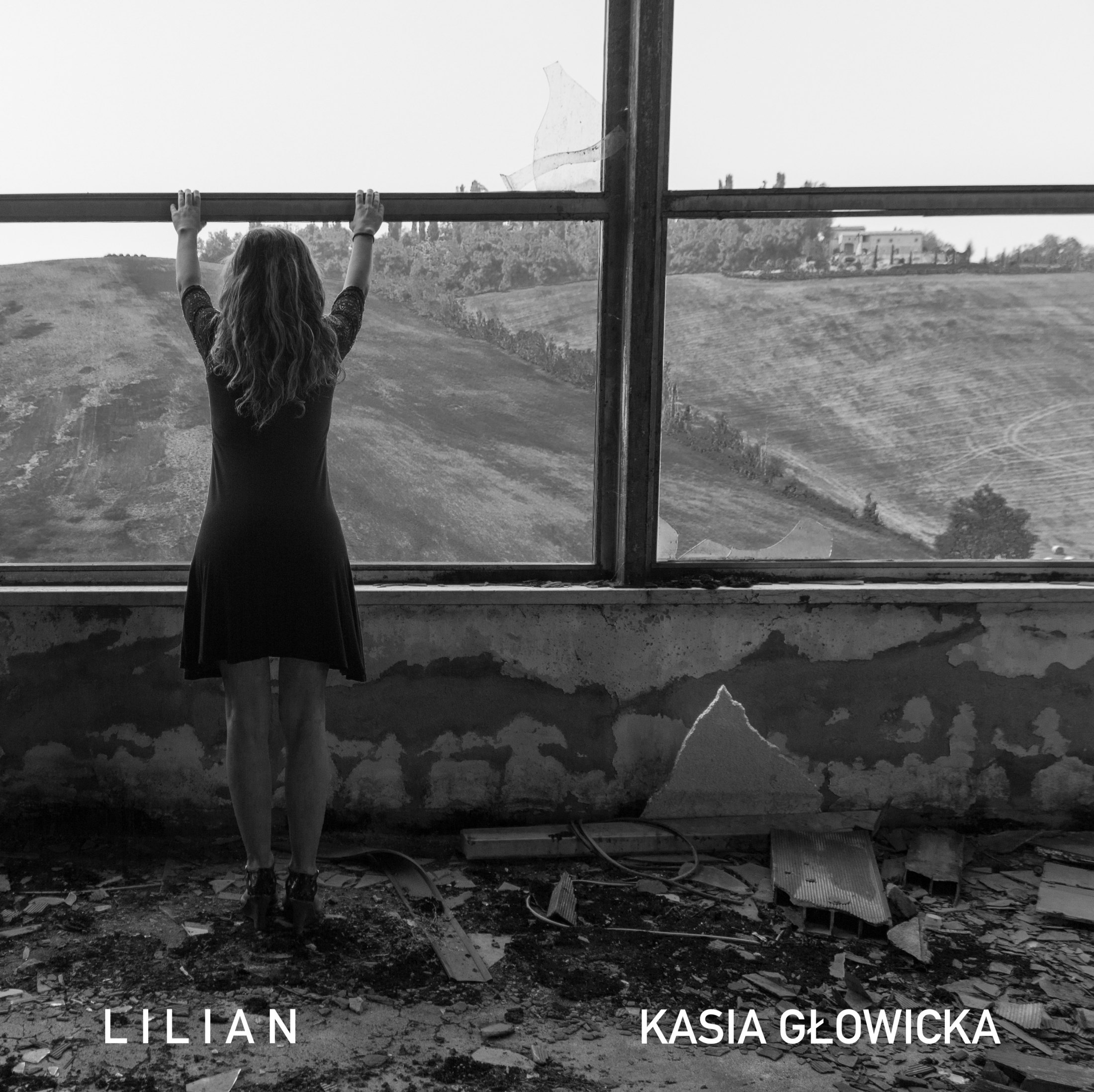
New season has opened, with planned several premieres. Warsaw Autumn festival premiered Kasia’s debut radio show “Lilian” which is also now released on digital streaming platforms, and later than month Kasia will begin collaboration with M13 foundation on music for a new movie. The upcoming projects include also release of “Music in 3 parts” and new commission for esteemed “Silesian Quartett”.
Jun 2020June

On June 26th Opera Vlaanderen and Ballet Vlaanderen will premiere Roxana’s Song - the newest, freshest collaboration of The Airport Society with Krystian Lada, in the scope of their online commission project ##imaginationisalive or #verbleedingsleeft.
Kasia embraced this challenge and has set the original, orchestral work of Karol Szymanowski (1882- 1937) to the pandemic proof version - a trio, with voice, oboe and flute, played in this recording by fantastic musicians of Antwerp Flemish National Opera and Ballet: Melanie Rosken, Arie van der Beek and Dagmara Dobrowolska. This poetic miniature was created with the intention that it will help our dear audience with the nostalgic longing of the human-nature connection. Several media outlets published favourable reviews, among others: Orfeo.com.pl and “Ruch Muzyczny”.
https://www.youtube.com/watch?time\_continue=12&v=rKbMs5a12Kk&feature=emb\_logo
Mar 2020March
March has been a busy month. In the beginning “The Airport Society” has been performing the opera “Unknown, I live with you” in the picturesque historic German town of Dessau, on invitation of the “Kurt Weill Festival”. And later that month, album “Unknown, I live with you”, with music from the critically acclaimed opera, is available on Spotify. Kasia has also been a guest speaker during “Capacity Triangle” - an initiative of European Composer and Songwriters Alliance.
Here, you can listen to the album
Photo @
Feb 2020February
Esteemed Polish mezzo-soprano, Małgorzata Walewska has been the star of the performance “Unknown, I live with you”, with her expressive, deeply moving performance she dominated the stage and captivated audiences. For her participation in Kasia’s project she has been nominated for prestigious, national “Olsnienia Cultural Awards” by Polish media company Onet . The CD has been jointly published and distributed by ARTEksounds and Bôłt Records.
Feb 2020Seeking the AirPort. An interview with director Krystian Lada
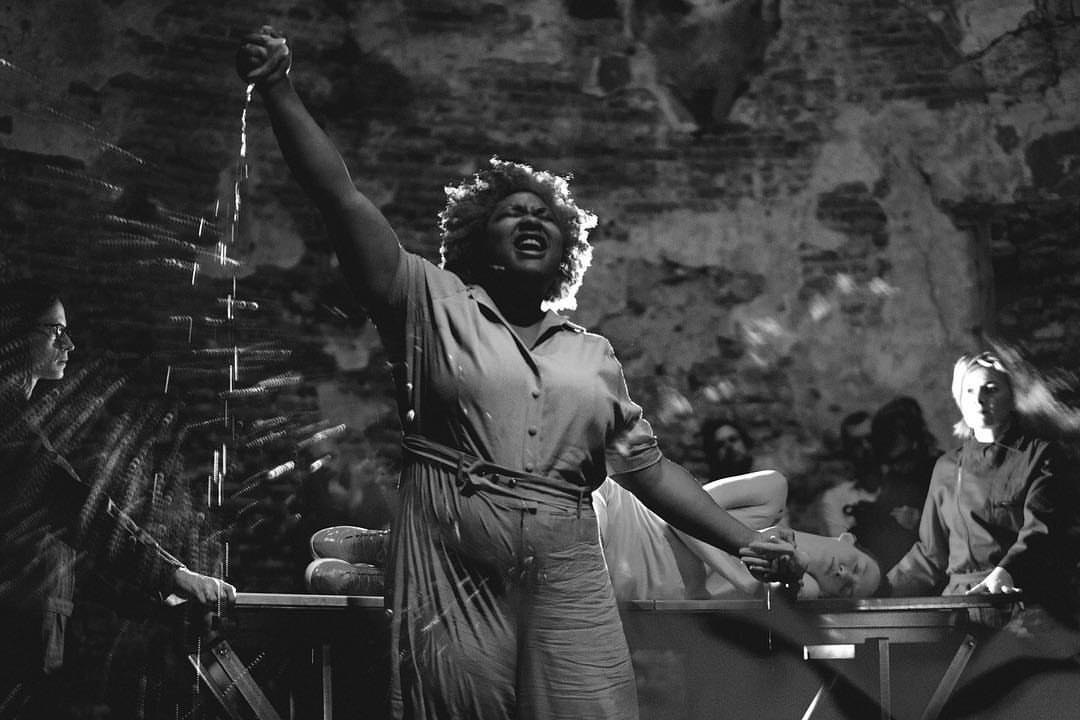
Featured in Kraków UNESCO City of Literature: Director Krystian Lada discusses the philosophy behind The Airport Society and why opera must confront difficult truths.
In a revealing interview with theatre critic Tomasz Domagała, published by Kraków UNESCO City of Literature, director and librettist Krystian Lada explores what it means to create opera that is both beautiful and critical—work that refuses to choose between aesthetic power and social relevance.
Lada challenges the false dichotomy that “opera can only be pretty and won’t teach us anything about the world, while critical art can teach us something but can’t be pretty.” His collaboration with composer Katarzyna Głowicka on Unknown, I Live With You proves opera can be both.
Working with texts by Afghan women who risk death for owning a pencil, Lada realized traditional directing wasn’t appropriate. “These are stories that cross the boundaries of our experience of reality,” he explains. Instead, the production documents the performers’ reactions to these testimonies.
When asked if the project empowers Afghan women, Lada clarifies it empowered everyone involved—from soprano Małgorzata Walewska to transgender singer Lucia Lucas to Black singers carrying their own stories of exclusion. Through Afghan women’s courage, the entire cast confronted “the archetypal exclusion of otherness from society.”
What does it mean to exist if you cannot tell your own story? How can art share voice and privilege with those who have been denied both?
Read the full interview on Kraków UNESCO City of Literature →
Interview conducted by Tomasz Domagała for the magazine accompanying the Opera Rara Festival, Krakow, 2020.
Feb 2020January
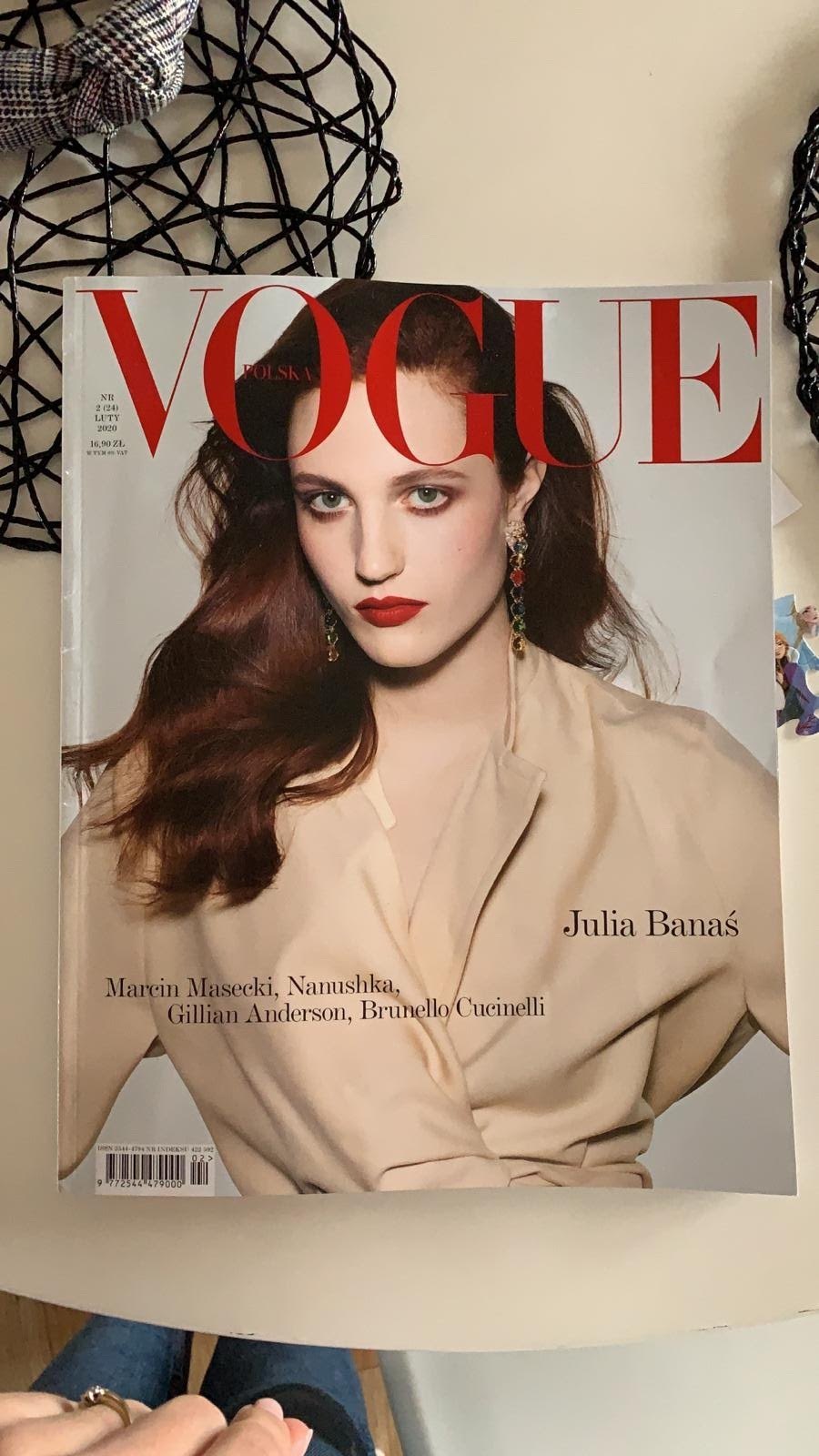
Preparations for the Polish premiere of “Unknown, I live with you” are on the way. The installation will have to be adapted to unique challenges of “Krikoteka” Theater. The performance will take part during Cracow festival “Sacrum Profanum”. Polish edition of “Vogue” Magazine and “Gazeta Wyborcza” have been encouraging its readers to check it out, while “Dwutygodnik” magazine published an exclusive article with Kasia about the mission of “The Airport Society” and the aims of the performance.
Jan 2020Dwutygodnik interview
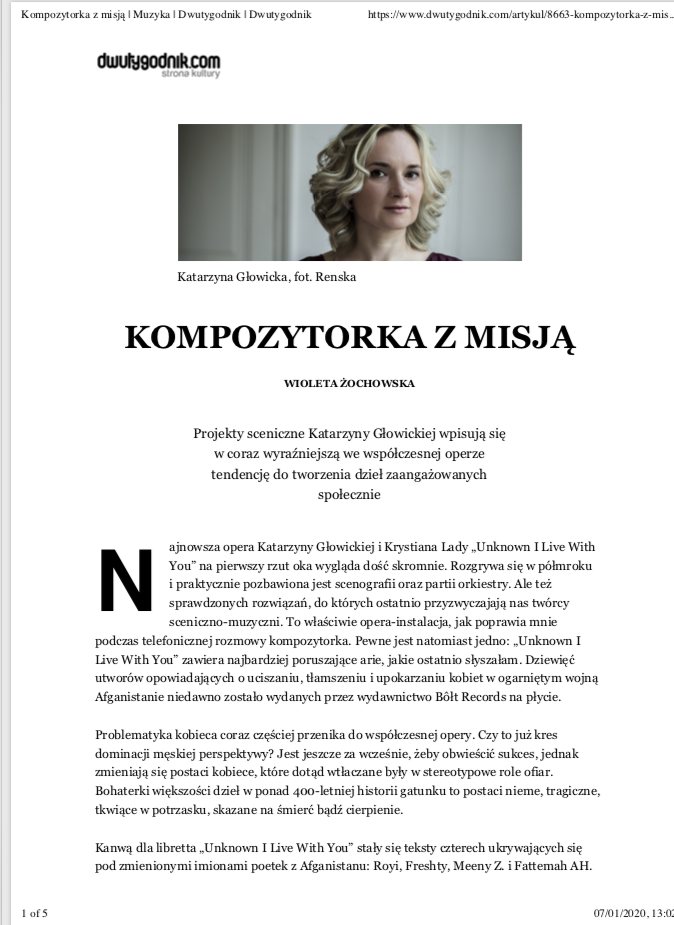
Polish Magazine Dwutygodnik - interview and article on work of Glowicka. Kompozytorka z misją | Muzyka | Dwutygodnik | Dwutygodnik “Composer with mission” Wioleta Zochowska Fragment in Polish: WIOLETA ŻOCHOWSKA Projekty sceniczne Katarzyny Głowickiej wpisują się w coraz wyraźniejszą we współczesnej operze tendencję do tworzenia dzieł zaangażowanych społecznie N ajnowsza opera Katarzyny Głowickiej i Krystiana Lady „Unknown I Live With You” na pierwszy rzut oka wygląda dość skromnie. Rozgrywa się w półmroku i praktycznie pozbawiona jest scenografii oraz partii orkiestry. Ale też sprawdzonych rozwiązań, do których ostatnio przyzwyczajają nas twórcy sceniczno-muzyczni. To właściwie opera-instalacja, jak poprawia mnie podczas telefonicznej rozmowy kompozytorka. Pewne jest natomiast jedno: „Unknown I Live With You” zawiera najbardziej poruszające arie, jakie ostatnio słyszałam. Dziewięć utworów opowiadających o uciszaniu, tłamszeniu i upokarzaniu kobiet w ogarniętym wojną Afganistanie niedawno zostało wydanych przez wydawnictwo Bôłt Records na płycie. Problematyka kobieca coraz częściej przenika do współczesnej opery. Czy to już kres dominacji męskiej perspektywy? Jest jeszcze za wcześnie, żeby obwieścić sukces, jednak zmieniają się postaci kobiece, które dotąd wtłaczane były w stereotypowe role ofiar. Bohaterki większości dzieł w ponad 400-letniej historii gatunku to postaci nieme, tragiczne, tkwiące w potrzasku, skazane na śmierć bądź cierpienie. Kanwą dla libretta „Unknown I Live With You” stały się teksty czterech ukrywających się pod zmienionymi imionami poetek z Afganistanu: Royi, Freshty, Meeny Z. i Fattemah AH. Pomysł na wykorzystanie ich wierszy zrodził się, kiedy kilka lat temu Krystian Lada – nominowany do tegorocznego Paszportu „Polityki” – trafił na Afghan Women Writing Project (AWWP). Nowojorska inicjatywa założona w 2009 roku przez dziennikarkę Mashę Hamilton i wspierana przez lokalne działaczki miała na celu stworzenie platformy, za pośrednictwem której afgańskie kobiety – uciszane, tłamszone, upokarzane – mogły opisać swoje historie. Potajemne spotkania owocowały kolejnymi wpisami na stronie. Myśli przelewane na papier i przekazywane aktywistkom trafiały do sieci, gdzie znalazły swoją publiczność: uważnych czytelników i zaangażowanych komentatorów. Każdy mógł przesłać autorkom słowa wsparcia i otuchy, wystarczyło wejść na stronę projektu i zostawić komentarz. English: WIOLETA ŻOCHOWSKA Katarzyna Głowicka’s stage projects are in line with the growing tendency in contemporary opera to create works that are socially engaged. The newest opera by Katarzyna Głowicka and Krystian Lady “Unknown I Live With You” at first glance looks rather modest. It takes place in the twilight and is practically devoid of scenery and orchestra parts. But also proven solutions that we are getting used to recently by stage and music creators. It is actually an opera-installation, as the composer corrects me during a telephone conversation. It is certain, however one: “Unknown I Live With You” contains the most moving arias I have heard recently. Nine songs about silencing, suppressing and humiliating women in war-torn Afghanistan have recently been released on an album by Bôłt Records. More and more often, female issues are being transferred to contemporary opera. Is this the end of the domination of the male perspective? It is too early to announce success, but the female characters, who have so far been squeezed into the stereotypical roles of victims, are changing. The heroines of most of the works in the over 400-year history of the genre, they are mute, tragic, trapped characters, doomed to die or suffer. The lyrics of four Afghan poets hiding under the changed names of the poets: Royi, Freshty, Meeny Z. and Fattemah AH became the canvas for the libretto “Unknown I Live With You”. The idea to use their poems was born when Krystian Lada - nominated for this year’s Polityka’s Passport - found his way to the Afghan Women Writing Project (AWWP). A New York-based initiative founded in 2009 by journalist Masha Hamilton and supported by local activists, aimed to create a platform through which Afghan women - being silenced, suppressed, humiliated - could tell their stories. Secret meetings resulted in more entries on the website. Thoughts put on paper and passed on to activists went online, where they found their audience: attentive readers and committed commentators. Everyone could send the authors words of support and encouragement, it was enough to go to the project website and leave a comment.
[/et_pb_text][/et_pb_column][/et_pb_row][/et_pb_section]
Jan 2020'Unknown, I live with you' ranked best in season.
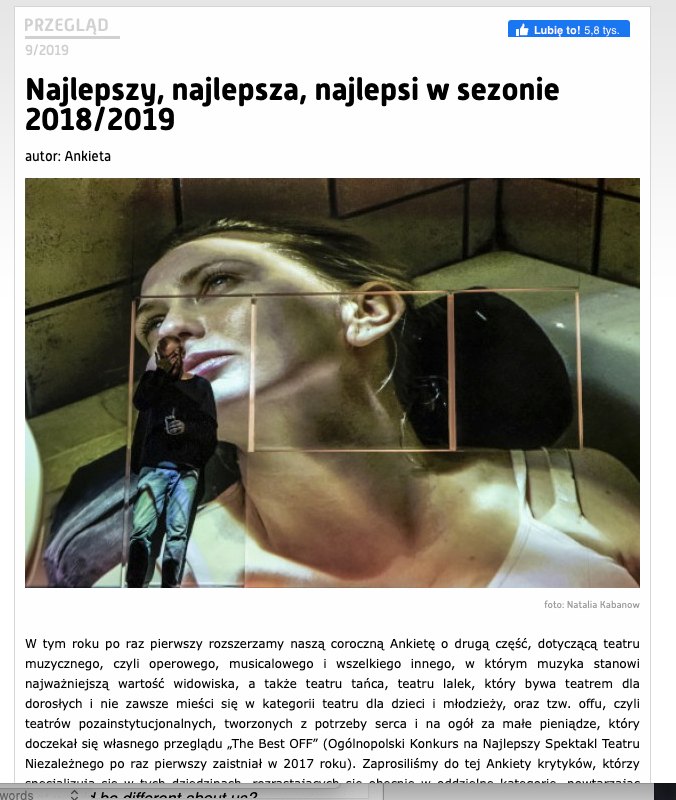
“Unknown I live with you” ranked best of 2018/2019 season in the music theater category by Polish “Teatr” magazine http://www.teatr-pismo.pl/…/najlepszy,_najlepsza,_naj…/2019/
Jan 2020'A Composer with a Mission': Dwutygodnik Explores Katarzyna Głowicka's Socially Engaged Opera
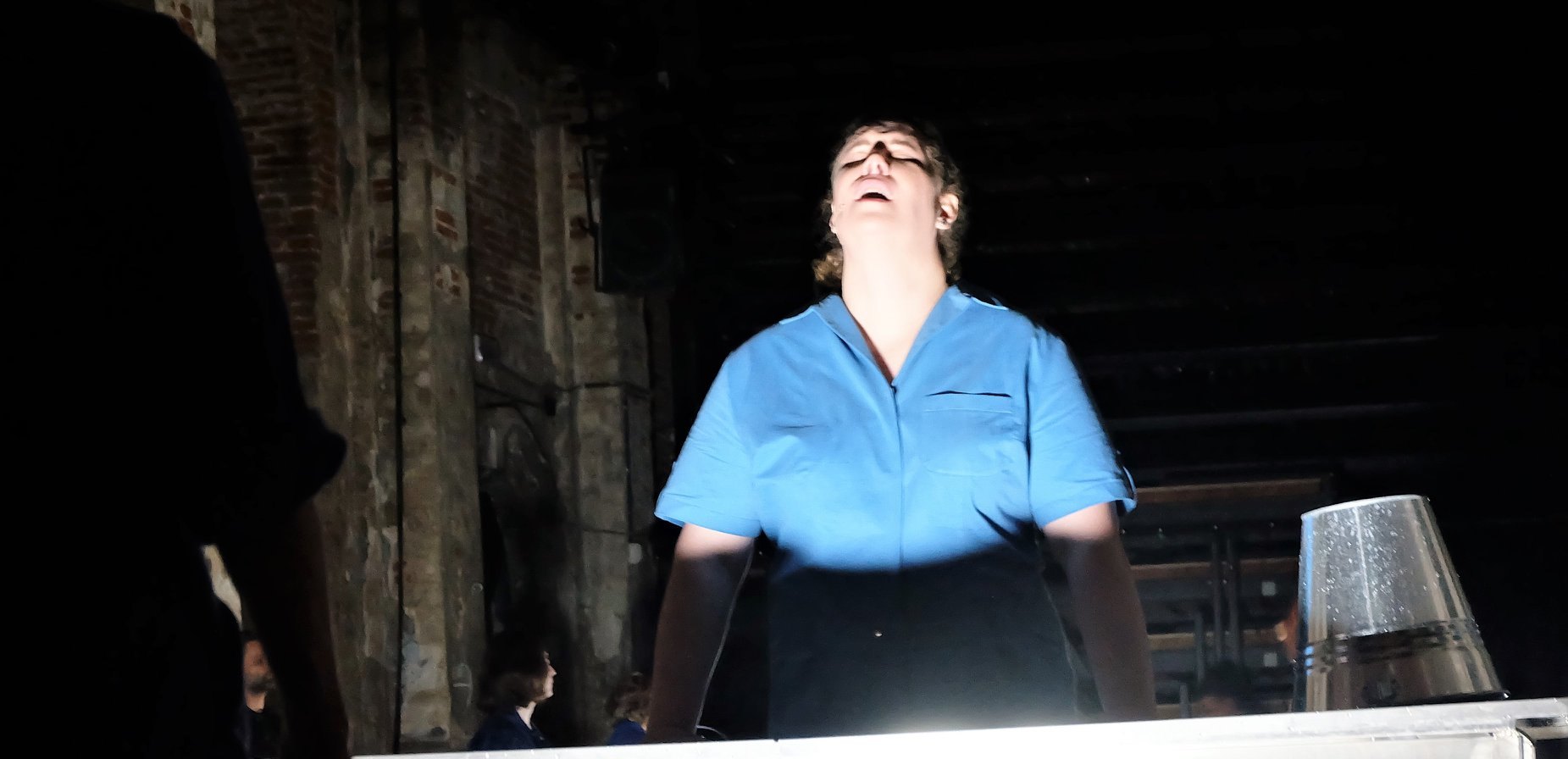
Featured in Dwutygodnik: Music critic Wioleta Żochowska examines how Katarzyna Głowicka’s work represents a growing trend in contemporary opera—art that refuses to separate beauty from social responsibility.
In her article “Kompozytorka z misją” (A Composer with a Mission), published in the respected Polish cultural magazine Dwutygodnik, Żochowska explores Głowicka’s latest opera-installation Unknown, I Live With You and what it reveals about the future of opera as a form of social engagement.
Key Insights from the Article
The Most Moving Arias Recently Heard: Żochowska begins with a striking claim—that the nine pieces comprising Unknown, I Live With You contain “the most moving arias” she’s heard recently. Despite the work’s modest appearance—minimal staging, no orchestra, performed in semi-darkness—its emotional impact is undeniable.
Words as Material: Głowicka is described as an artist “sensitive to the weight of words.” Her 2005 album “Seven Sonnets” set Shakespeare’s love poems to sparse arrangements of string quartet and electronics. In her music, minimalism of means, authenticity, and clarity of position are paramount.
Western Instrumentation for Afghan Stories: As a composer rooted in Western European culture, Głowicka deliberately chose familiar instrumentation—string quartet and electronics—rather than traditional Afghan instruments. This choice was both practical (mobility) and philosophical (authenticity to her own cultural position while adding her world to these stories).
Electronics as Live Response: Using custom algorithms, Głowicka creates synthesized sound layers that follow performers in real-time. In “A World of Luck,” she generates progressive chords; in “I Thought It Was a Dream,” she spatializes sounds of ticking bombs and body sounds, moving with or away from the singer as the drama unfolds.
Voice as Revolutionary Power: The article emphasizes how giving voice creates agency. As Żochowska notes, those who speak are usually those who hold power. Voice can help win that power. The opera’s heroines become seeds of revolution, carriers of equality.
Opera’s Shifting Focus: Głowicka’s projects exemplify contemporary opera’s growing tendency to shift emphasis from purely artistic values toward conveying socially significant ideas and sending impulses that call for action.
A Natural Evolution: When asked about the evolution in her work, Głowicka responds: “The turn toward socially engaged music is a natural stage of my development as a composer, and also a consequence of responding to today’s reality.”
The Mission
Żochowska describes Głowicka as “a composer with a mission”—someone who not only creates but also works with social organizations and teaches art-related subjects at business schools. She seeks the appropriate language to describe pressing issues: social inequality, discrimination against women, violence, the refugee crisis. The goal is to create work that has a chance to shake the consciousness of audiences—just as the stories of Afghan women do.
The article also reveals Głowicka’s next project: the story of a man who lived in a refugee camp in Libya, who has already expressed his desire to meet and familiarize himself with the emerging work.
Read the full article in Dwutygodnik →
Published in Dwutygodnik, January 2020. Written by Wioleta Żochowska, music critic and curator who collaborates with “Glissando” and “Ruch Muzyczny” and programs the “Experimental Tuesdays” contemporary music series at Sinfonia Varsovia.
Article created in cooperation with the Kraków Festival Office, organizer of the Sacrum Profanum festival.
Nov 2019November
In the beginning of last month, Kasia’s new piece for “Farewell River”, commissioned by “Sacrum Profanum” festival has been premiered by a fantastic accordion duo “ACCORDRONE.
This month has also brought several publications - new book by “Krytyka Polityczna” publishing house, with Kasia’s contribution, as well as publication about the new opera “Unknown, I live with you” at the esteemed New York based magazine “Theater Times”.
Oct 2019Book - We called it utopia
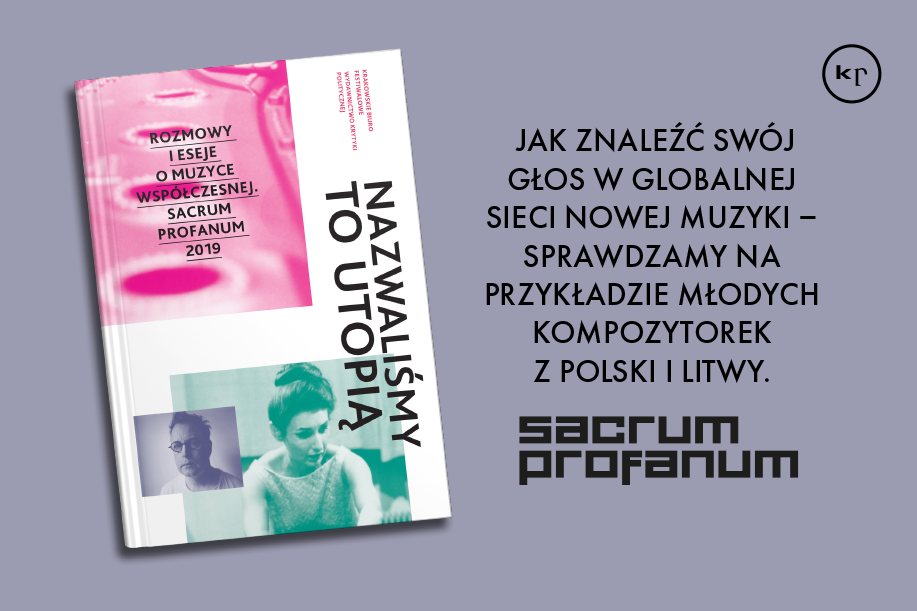
Esteemed Polish publishing house “Krytyka Polityczna” (Political critics) has published, together with festival “Sacrum Profanum” a new book, with among others interview with Kasia.
“We called it utopia” - initiative of Sacrum Profanum and publishing house Krytyka Polityczna. Edited by Jan Topolski.
Here link to the book.
Aug 2017Review at African Paper

“Seven Sonnets” reviewed by “African Paper” - online magazine from Germany.
Jul 2017Glowicka at “Heroines of Sound” Berlin
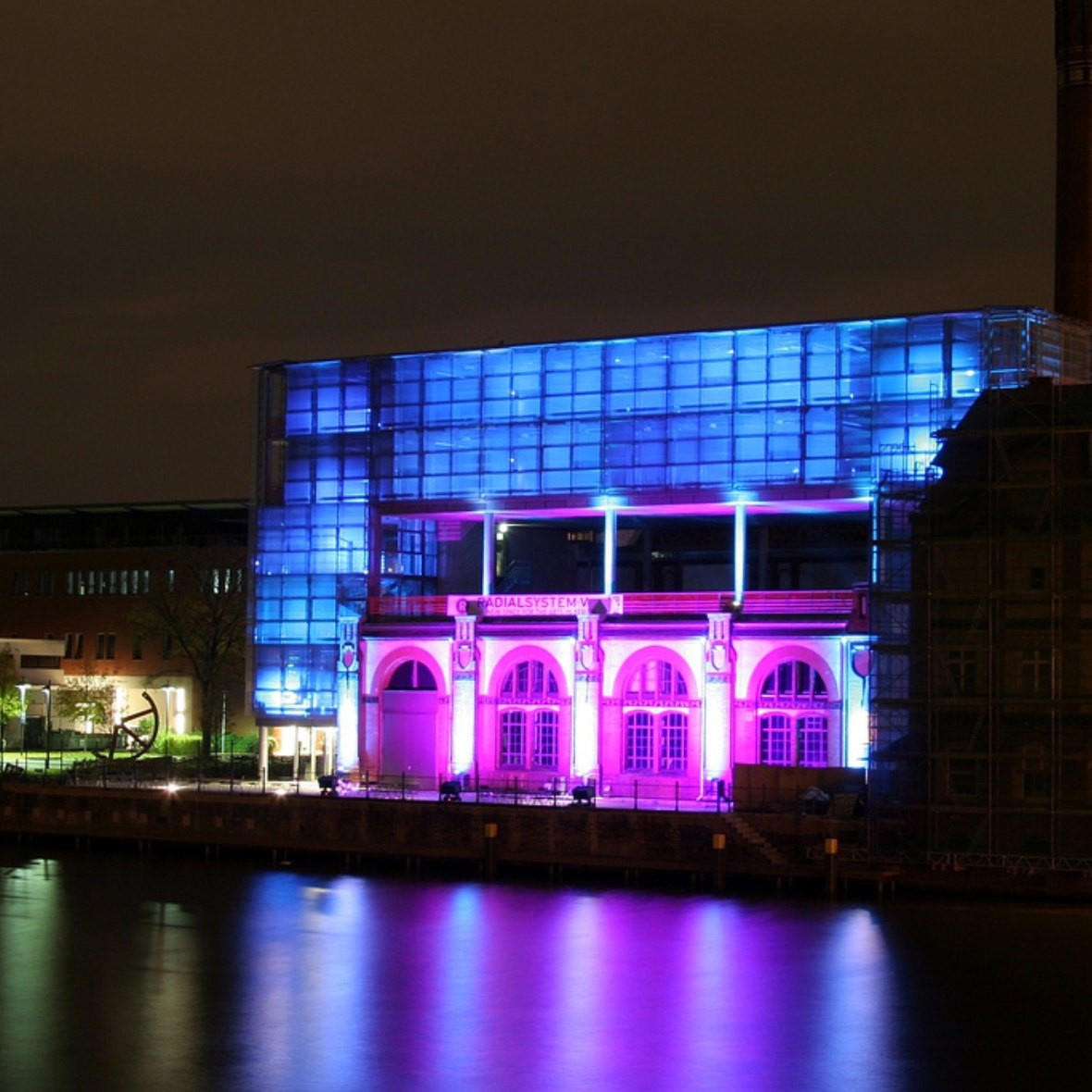
Piece “Sun spot” was featured at Berlin’s festival “Heronies of Sound” at Radialsystem, Berlin.
Mar 2017Favola during Insomnio night at Tivolivredenburg, Utrecht
In 2017 Insomnio ensemble celebrates its twentieth anniversary! On Friday, April 21, therefore, we will have a grand musical marathon from 19:00 to 3:00 am at various locations in TivoliVredenburg. It will be a night full of highlights from the 20th and 21st century music. Insomnio night also provides opportunities to actively participate, including a performance by amateur ensemble NOOM and a karaoke version of Die Dreigroschenoper. Ticket sales have started, through the TivoliVredenburg website!
Feb 2017Women create opera - discussion and concert at Poznan Grand Theater
On Saturday 18 February at. 16:00 at the Grand Theatre in Poznan, UNITED STATES OF OPERA foundation, invites for an extraordinary meeting - “WOMEN CREATE OPERA”.
Among the guests Katarina Głowicka, Marzena Diakun and Elżbieta Sikora and . During the meeting soprano Joanna Freszel will present selection of contemporary pieces. The talk will be led by Monika Pasiecznik and Krystian Lada.
United States Opera is a new series of meetings with the public devoted to the current state of Polish opera stage. Before each launch of the Opera House in Poznan, excellent artists, journalists, scientists and invite the audience to discuss issues related to opera and classical music in the contemporary socio-cultural context. The ambition of the series is the location of opera on the map of current events and trends. Each meeting is devoted to a different aspect of the opera. The initiator and curator of the cycle is a playwright Krystian Lada.
Oct 2016'Seven Sonnets'reviewed by Jazznmore
Yet another review of “Seven Sonnets”. This time in the September issue of swiss magazine Jazznmore. below translation of a fragment: “The fascinating tension of Glowicka’s compositions comes from the contrast between the old-time sound of the Contertenor, the classical arranged string quartet and the almost timelessly spherical-sounding electronic collages, which portray the historically evocative texts into an atmospheric dimension and shake new, contemporary meanings to Shakespeare’s texts.”
Oct 2016Polish “Lizard Magazine” on “Seven Sonnets”
“Seven Sonnets” reviewed in progressive music magazine “Lizard” from Poland with 8/10.
“the most beautiful is the culmination of the disc with minimalist, hardening at a moment in time thanks to the electronic effects of the strings”
Lizard is the only Polish magazine devoted to the broader progressive music. Authors are looking for and describe everything in the music fresh, interesting and creative, both in the past and in the present.
Sept 2016Italian magazine “Blow up” on “Seven Sonnets”
Italian avangarde music magazine“Blow up” writes on emotionality and dialectics of the album “Seven Sonnets” in the September issue. The Sonnets received favorable review by Dionisio Capuano.
Blow Up is a monthly Italian magazine about “rock & other contaminations”, as the caption states: out rock, electronica, techno, house, experimental, industrial, improv/jazz, traditional.
Cd “Seven Sonnets” has been recorded with Rubens Quartet and contratenore Arnon Zlotnik.
Aug 2016Italian magazine 'Neural' reviews 'Seven Sonnets'
“Glowicka has masterfully led the musical project on a suspended ridge between tradition and modernity.”
Read here review at Italian “Neural” magazine.